
The Scapegoat
Holman Hunt · 1854
Oil on canvas
Port Sunlight, United Kingdom - Lady Lever Art Gallery
LDA · XV · MMXXV
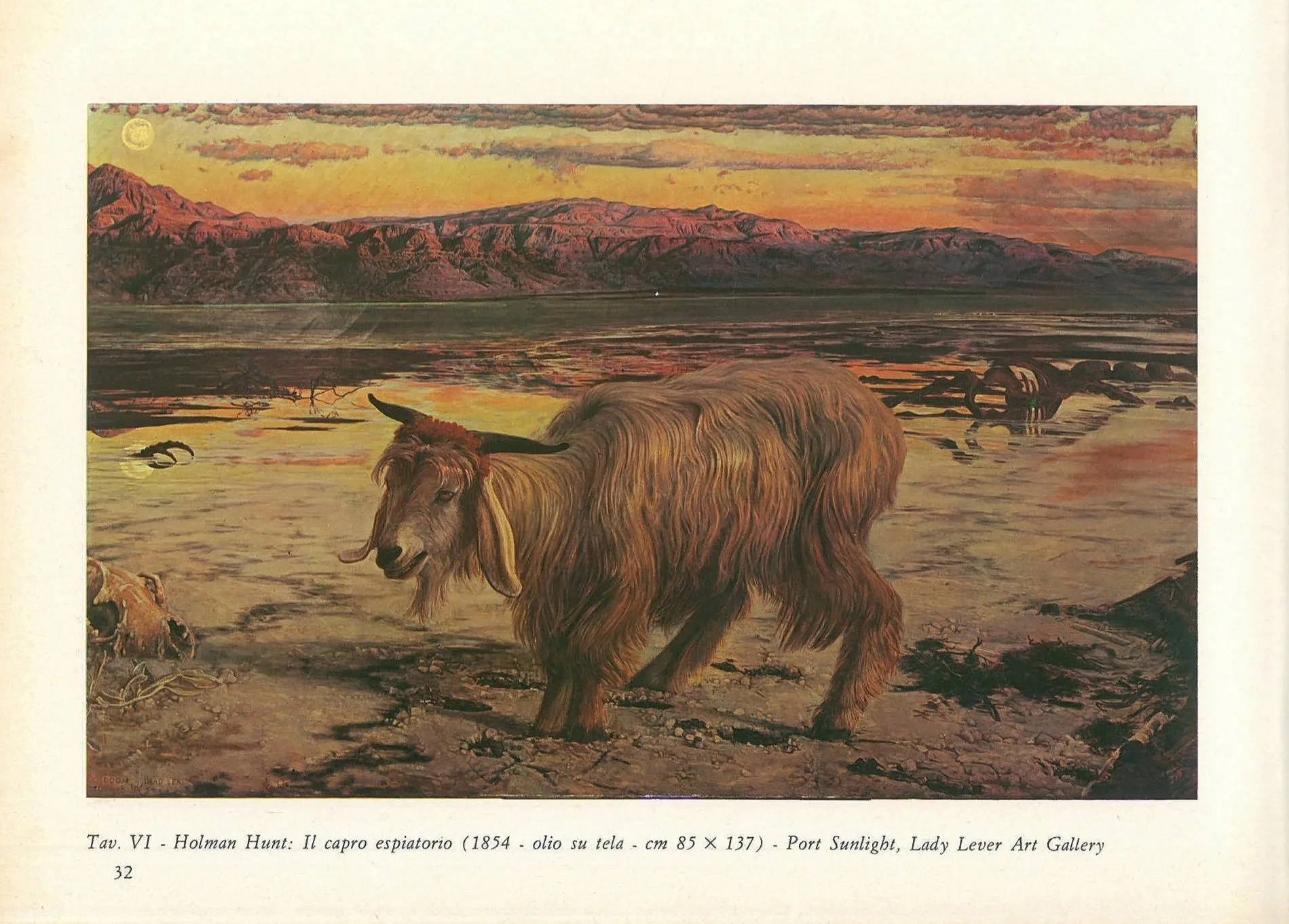
Source
Book · I Preraffaelliti di Renato Barilli · Fratelli Fabbri Editori · 1967 · p. 32
Holman Hunt paints the Old Testament ritual of the scapegoat, in which the sins of the community were symbolically placed upon a goat and driven into the wilderness to die in isolation. The setting of the Dead Sea makes the narrative literal rather than allegorical - this is a landscape of salt pans, lifeless water & geological desolation where nothing can return. The goat’s wounds and trembling stance mark exhaustion rather than sacrifice: atonement here is not noble, but imposed. The scattered bones, the salt crust & the blood-red mountains at sunset intensify the sense of abandonment - impurity has been displaced, not healed. Hunt presents the biblical idea of substitution not as redemption, but as exile.
Reposting welcome; please credit Libreria d’Arte - Studio Soli.
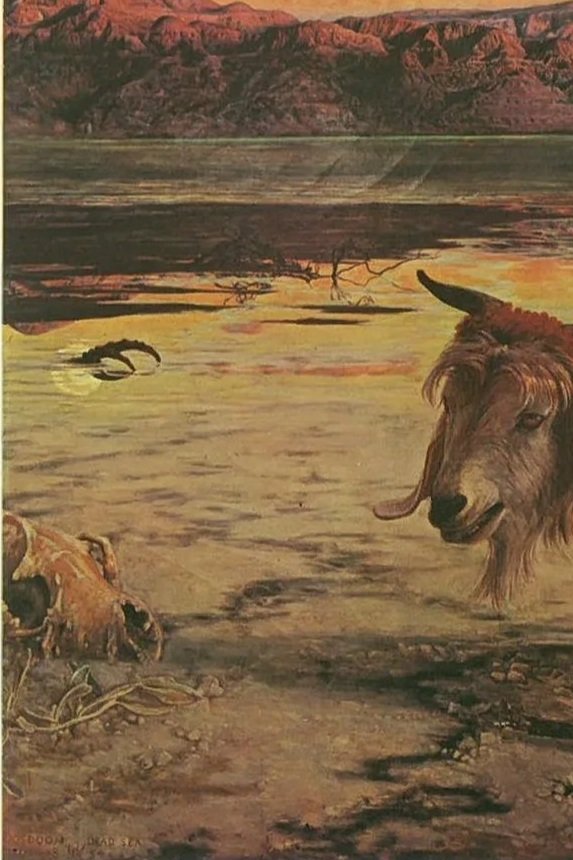
Detail
Bones scattered on the salt plain - the remains of previous scapegoats. The landscape becomes proof of repetition rather than miracle, showing that ritual cleansing depends on continual expulsion.
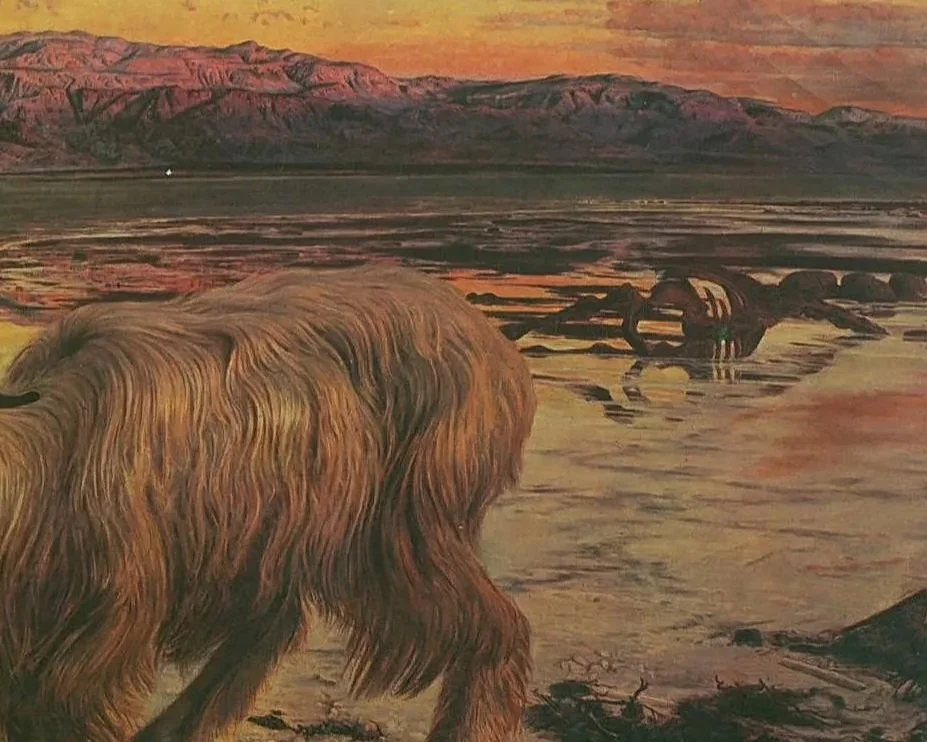
Detail
The goat’s matted coat & limping posture - the weight of communal sin rendered as physical deterioration. In the original ritual, innocence bears guilt so that others may remain pure.
The Dead Sea shoreline - stagnant water that receives nothing back. Hunt locates the myth in a real geography where life cannot grow, translating spiritual exile into literal uninhabitability.
The violet-red mountains at sunset - nature reflects judgment. The beauty of the light contrasts with the cruelty of the ritual, showing that holiness & violence can coexist in the same story.
