
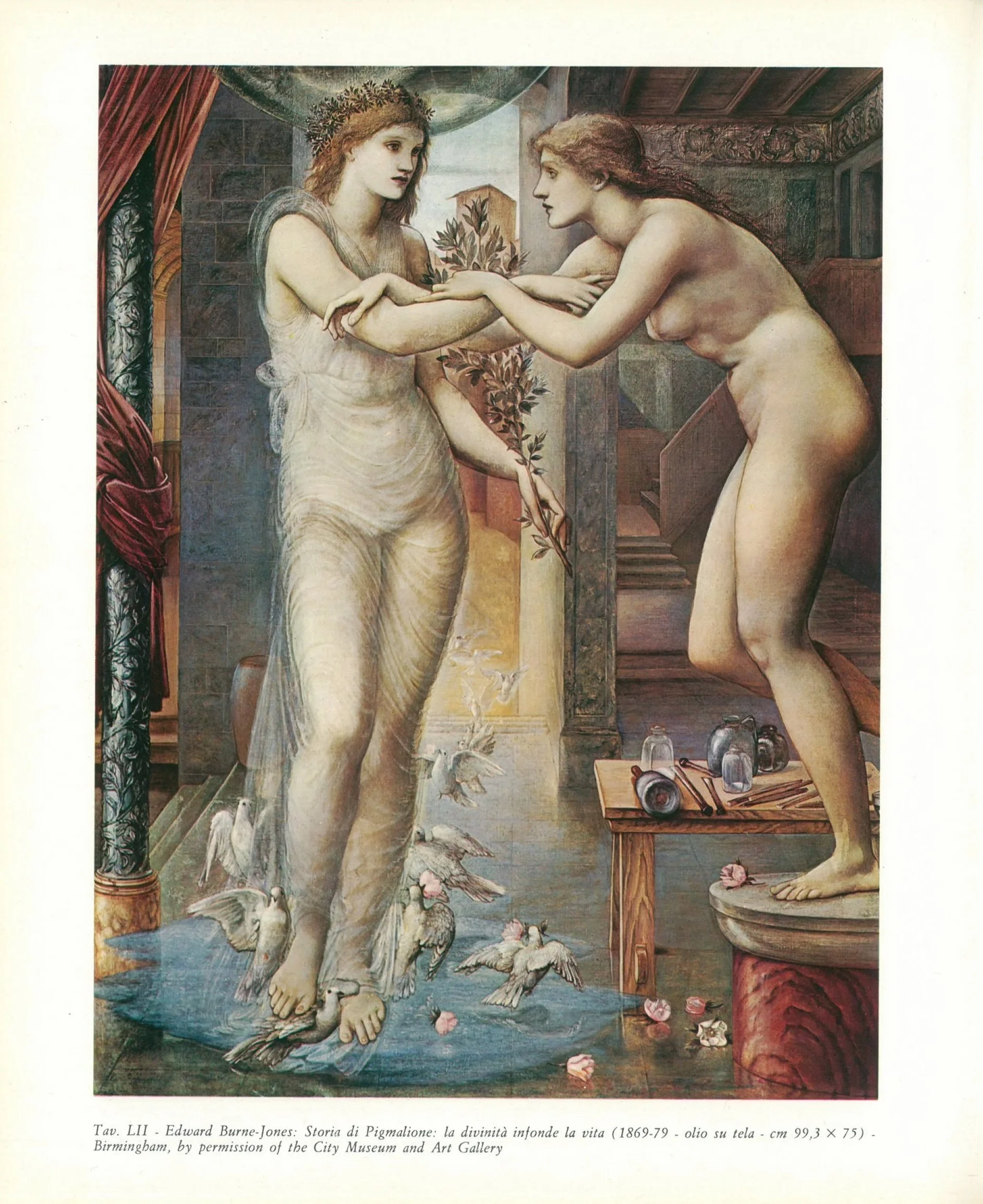
The Story of Pygmalion: The Godhead Breathes Life
Edward Burne-Jones · 1869–79
Oil on canvas
Birmingham, United Kingdom - Birmingham Museum & Art Gallery
LDA · XVI · MMXXV
Source
Book · I Preraffaelliti di Renato Barilli · Fratelli Fabbri Editori · 1967 · p. 78
This painting illustrates a pivotal scene from the Greek myth of Pygmalion, the sculptor who fell in love with the statue he carved. Burne-Jones illustrates the moment in Greek myth when Galatea - once a marble sculpture - is given life through divine intervention. The clothed male figure to the left is Pygmalion, the sculptor, and the nude female figure standing on the pedestal to the right is Galatea, the statue at the threshold of becoming human. Her body still carries the stillness and colour of stone, while Pygmalion’s touch signals the first recognition between creator & creation. Doves gather at his feet, marking the sculptor as the recipient of Aphrodite’s favour, making the animation of Galatea a gift to him rather than a choice of her own. The studio setting grounds the myth in labour and tools, yet the transformation surpasses technique - creation becomes incarnation. The scene questions whether life is shaped by human hands or granted through divine will.
Reposting welcome; please credit Libreria d’Arte - Studio Soli.
Detail
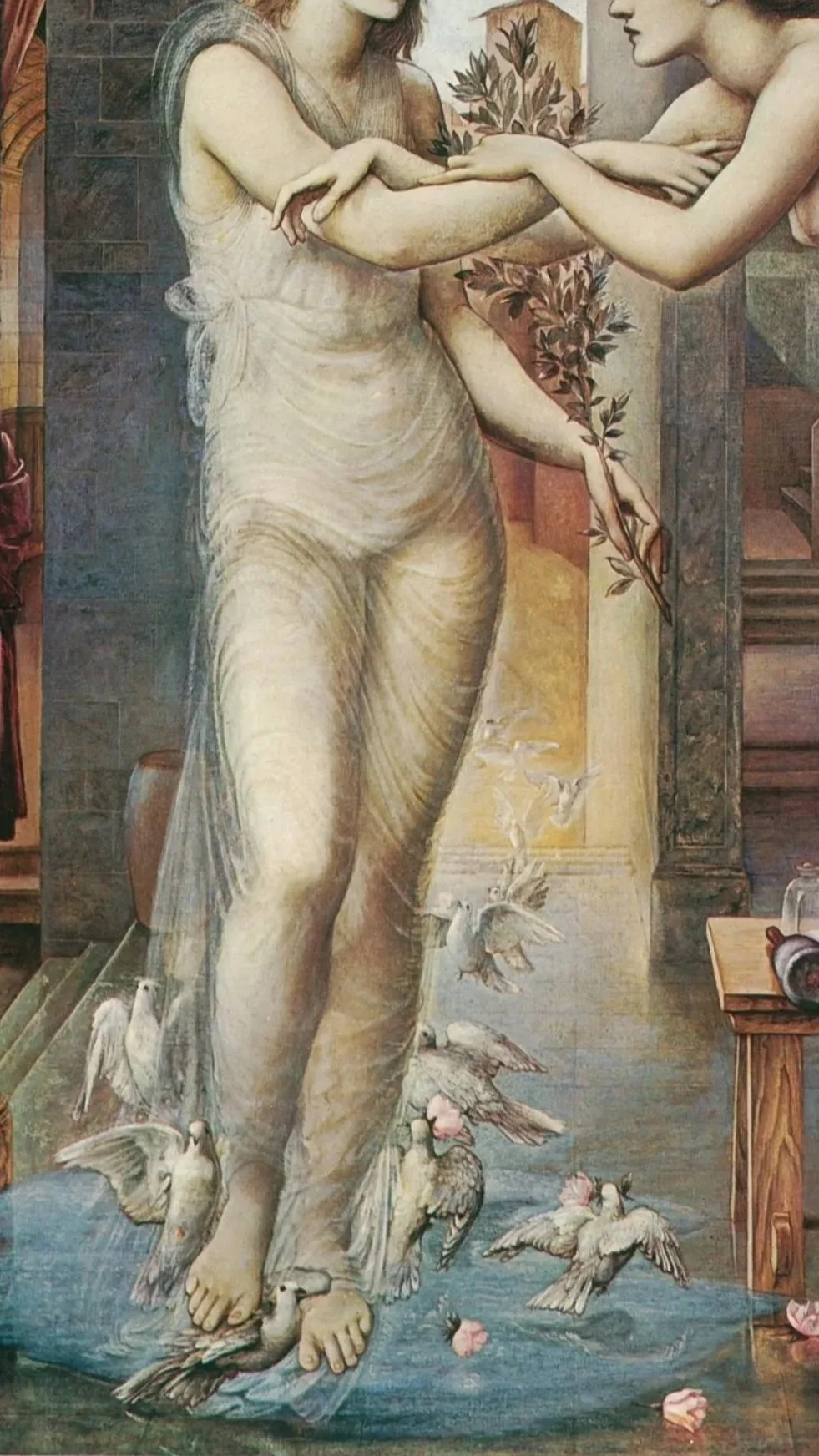
Doves gathered at Pygmalion’s feet - the birds of Aphrodite identifying him as the one blessed. Galatea becomes human because the miracle is given to the sculptor, not because she seeks life herself.
The translucent veil over Pygmalion - a ceremonial drapery that frames him not as a craftsman, but as a devotee. Burne-Jones presents the sculptor in the posture of worship, showing that Galatea’s awakening is answered prayer rather than artistic achievement.
The fallen rose petals scattered on the floor - roses belong to Aphrodite, signalling that transformation begins through desire rather than skill. The petals sit between creator & creation, marking the threshold of awakening.
Detail
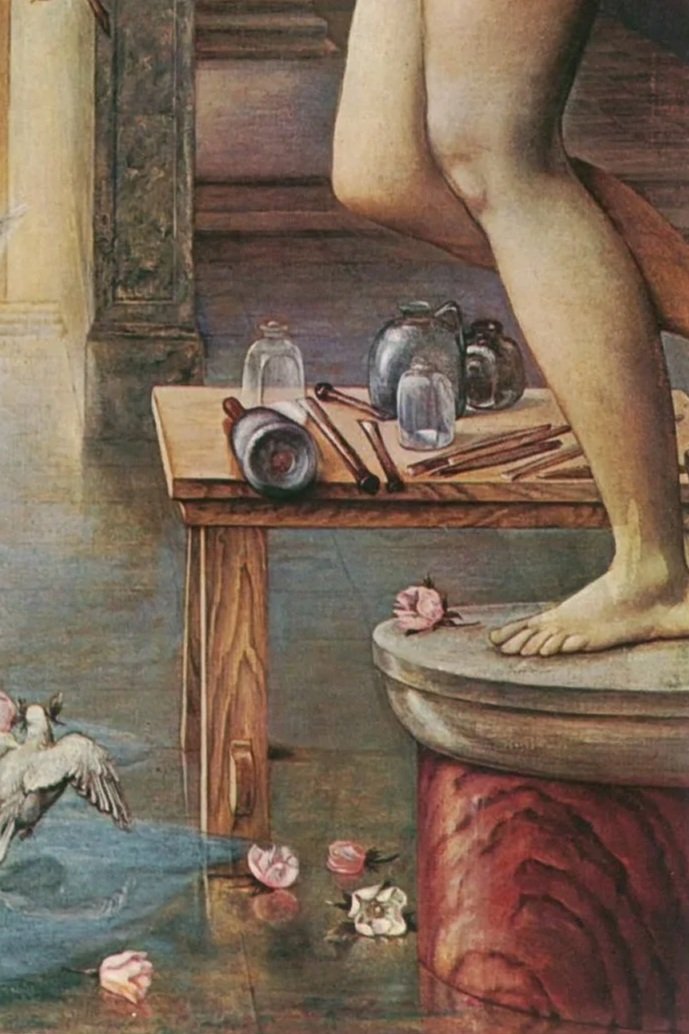
The jars & sculptor’s tools on the table - reminders of material practice. Their stillness underscores the paradox: life enters the room not through work, but through intervention beyond human skill.
Detail
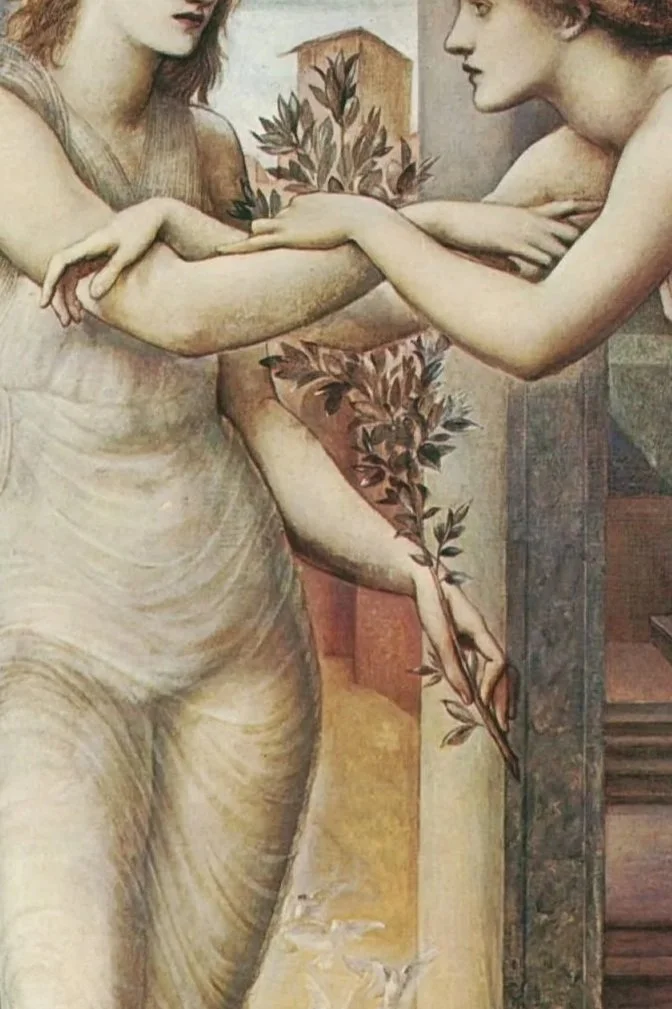
The myrtle branch in Pygmalion’s hand - myrtle belongs to Aphrodite, marking the sculptor as one who petitions the goddess rather than commands creation. The awakening of Galatea is not an act of craftsmanship, but the granting of a prayer.
