
The Kiss of Jupiter and Io
Giuseppe Patania · ca. 1828
Oil on canvas
Palermo, Italy - Galleria Municipale
LDA · XIV · MMXXV
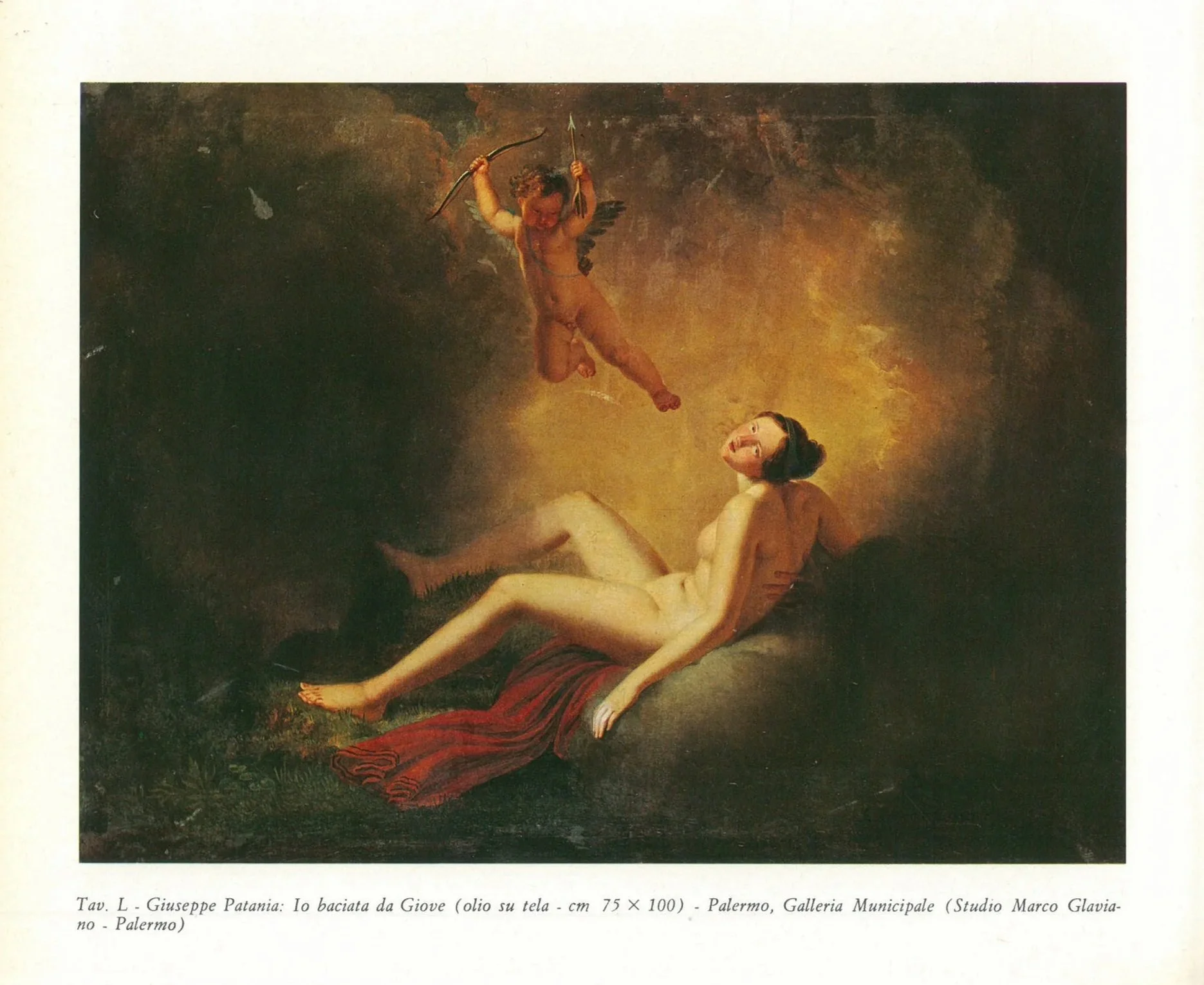
Source
Book · Il Neoclassicisimo nella Pittura Italiana di Angela Ottino Della Chiesa · Fratelli Fabbri Editori · 1967 · p. 76
Giuseppe Patania depicts the myth of Io at the moment Jupiter approaches her not in human form, but as a cloud. According to Ovid, Jupiter conceals himself to initiate the encounter while avoiding the gaze of Juno, and Patania captures that transformation through the luminous mist that envelops the reclining figure. Cupid descends with bow and arrow to ignite irresistible desire - not between two lovers, but as a mechanism of divine will overriding mortal agency. Io’s upward gaze shows recognition without escape: mythologically she is both chosen and claimed. The scene marks the beginning of her transformation into a heifer and the cycle of pursuit, punishment & exile that will ultimately lead to her worship as Isis.
Reposting welcome; please credit Libreria d’Arte - Studio Soli.
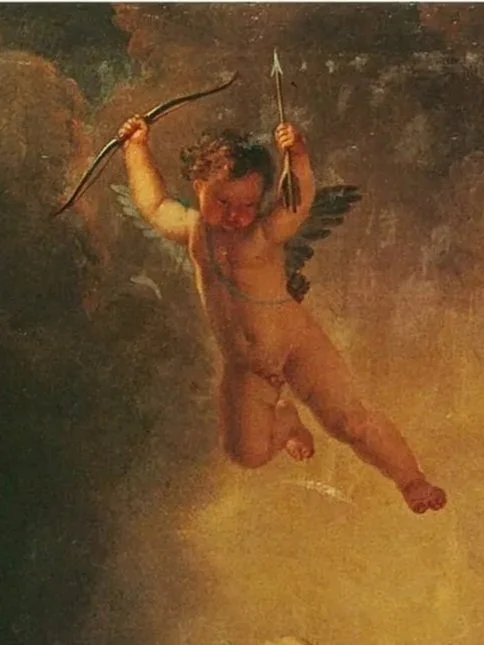
Detail
Cupid (Eros in Roman) with bow & arrow - Eros descends not as a playful child but as the trigger of divine desire, carrying only the instruments required to bind Io to Jupiter’s will. His arrow marks the moment in which attraction shifts from mortal agency to divine compulsion, initiating the mythic chain of events that will define Io’s fate.
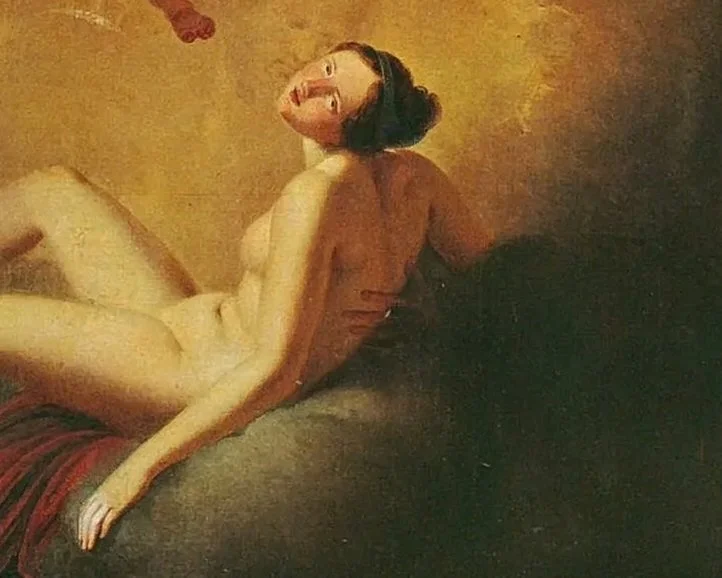
Detail
The hand emerging from the cloud on Io’s back - Jupiter made visible only at the moment of contact. In neoclassical depictions of the myth, the god assumes no human form, yet the physical touch declares possession & divine will. The scene shifts from atmosphere to claim - the point where Io’s fate is sealed.
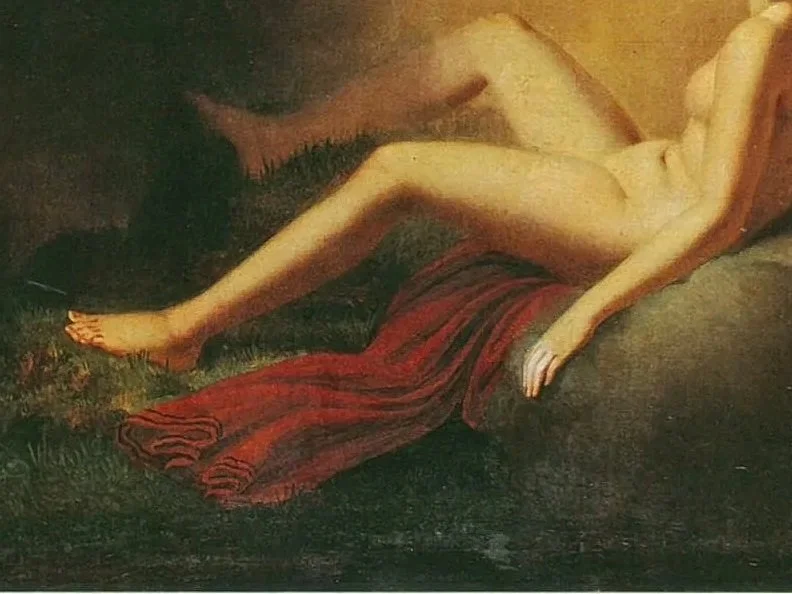
Detail
The red cloth beneath Io - a neoclassical emblem of passion that marks vulnerability rather than consent. By placing her on the drapery rather than wrapping her in it, the scene shows desire becoming fate & signals the moment her life shifts from peace to pursuit.
