
Ophelia
John Everett Millais · 1852
Oil on canvas
London, United Kingdom - The Tate Gallery
LDA · XX · MMXXV
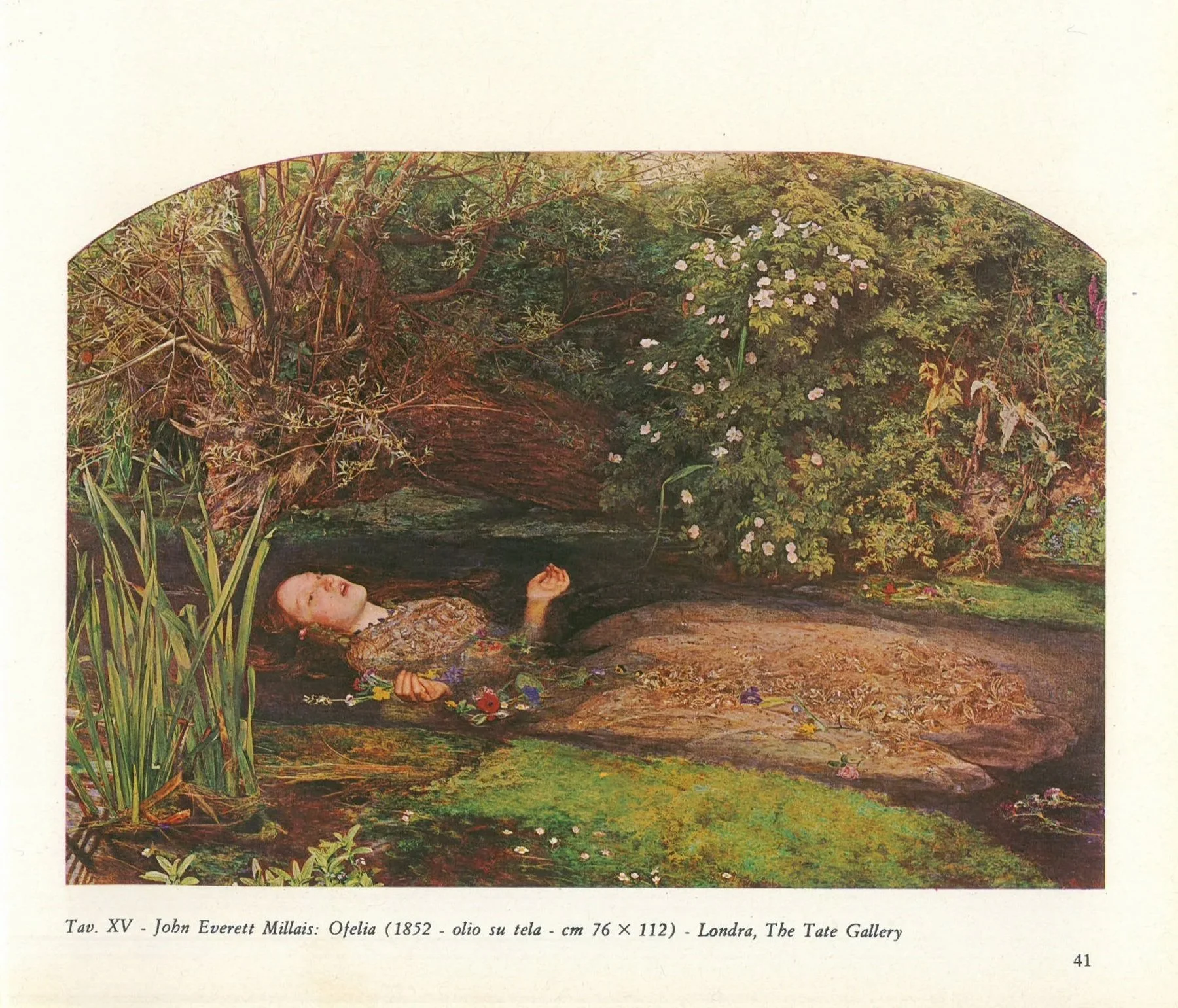
Source
Book · I Preraffaelliti di Renato Barilli · Fratelli Fabbri Editori · 1967 · p. 41
The painting depicts Ophelia from Shakespeare’s Hamlet at the moment she drifts downstream after falling from the willow tree. Millais constructs the scene through botanical accuracy rather than theatrical drama, embedding identifiable flowers associated with Victorian language-of-flowers symbolism. The flora surrounding the figure reinforces themes of innocence, love and death rather than merely decorating the setting. The motionless pose and upward gaze deny narrative action and instead frame Ophelia as a subject of contemplation within a densely natural environment. The contrast between the richly detailed landscape and the passive human figure reflects the Pre-Raphaelite preoccupation with nature as a field of symbolic meaning.
Reposting welcome; please credit Libreria d’Arte - Studio Soli.
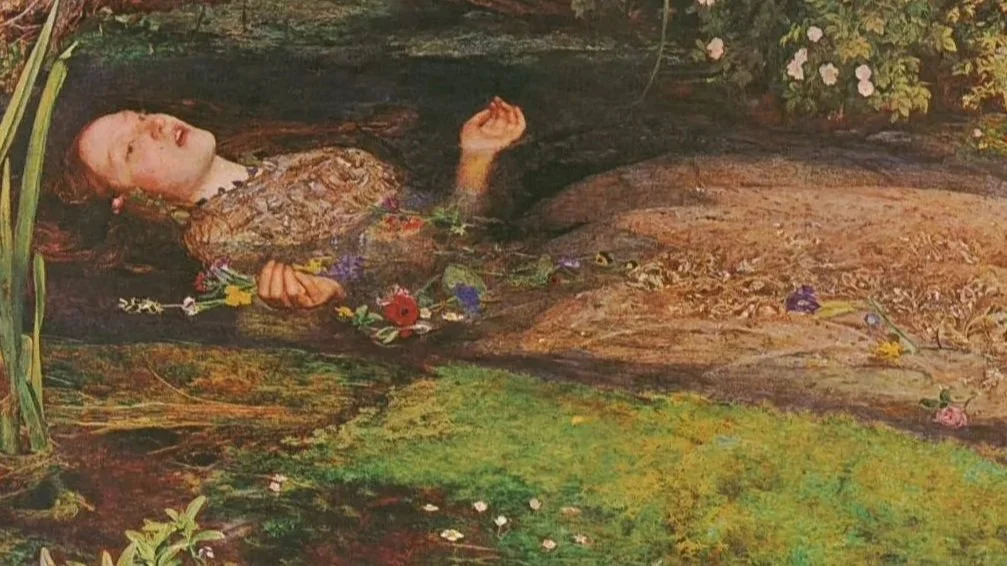
Detail
Floral species - the violets, poppies, daisies & forget-me-nots correspond to Victorian symbolic associations with innocence, sleep, love lost & remembrance, placing the subject’s death within a codified symbolic system rather than descriptive realism.
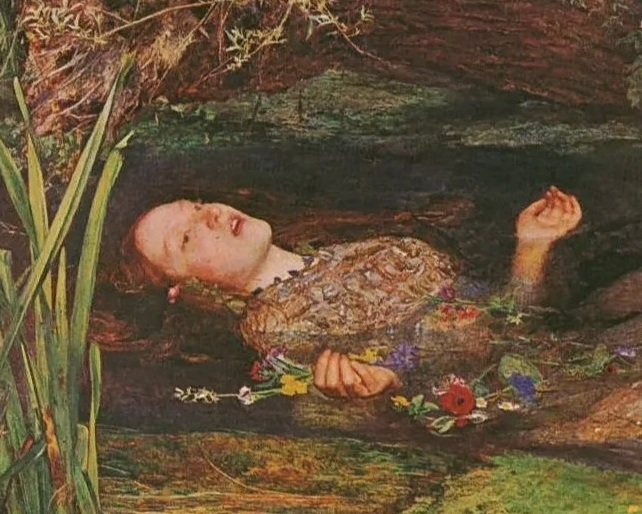
Detail
Upward gaze - the direction of Ophelia’s eyes reflects a common Pre-Raphaelite visual device in which a passive figure is presented as receptive to unseen forces, signalling symbolic rather than psychological intent.
