
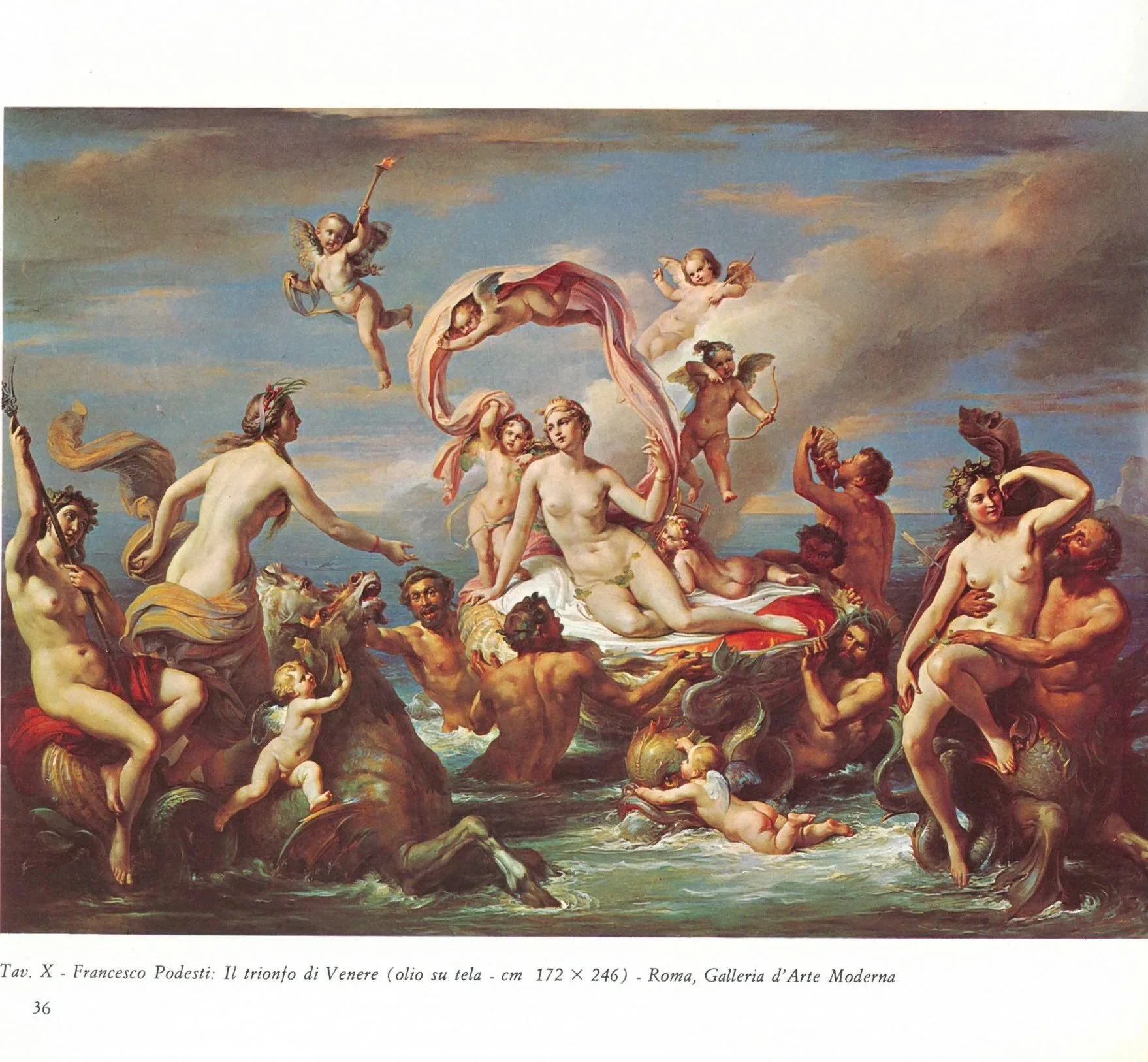
The Triumph of Venus
Francesco Podesti · 1854
Oil on canvas
Rome, Italy - Galleria d’Arte Moderna
LDA · XXI · MMXXV
Source
Book · La Pittura di Storia dell’Ottocento Italiano di Fortunato Bellonzi · Fratelli Fabbri Editori · 1967 · p. 36
The painting depicts the sea-borne arrival of Venus, surrounded by sea deities and attendant figures in a crowded allegorical composition. Podesti draws upon classical mythological imagery while combining academic history painting with mid-19th-century theatrical staging. The central position and frontal illumination of Venus establish her as the axis of the scene, while the supporting figures operate hierarchically rather than narratively. The iconography reinforces themes of divine beauty, fecundity and maritime procession rather than a specific myth episode. The work represents the 19th-century tendency to update classical triumphs in a grand academic format, using myth not as storytelling but as affirmation of ideal beauty.
Reposting welcome; please credit Libreria d’Arte - Studio Soli.
Detail
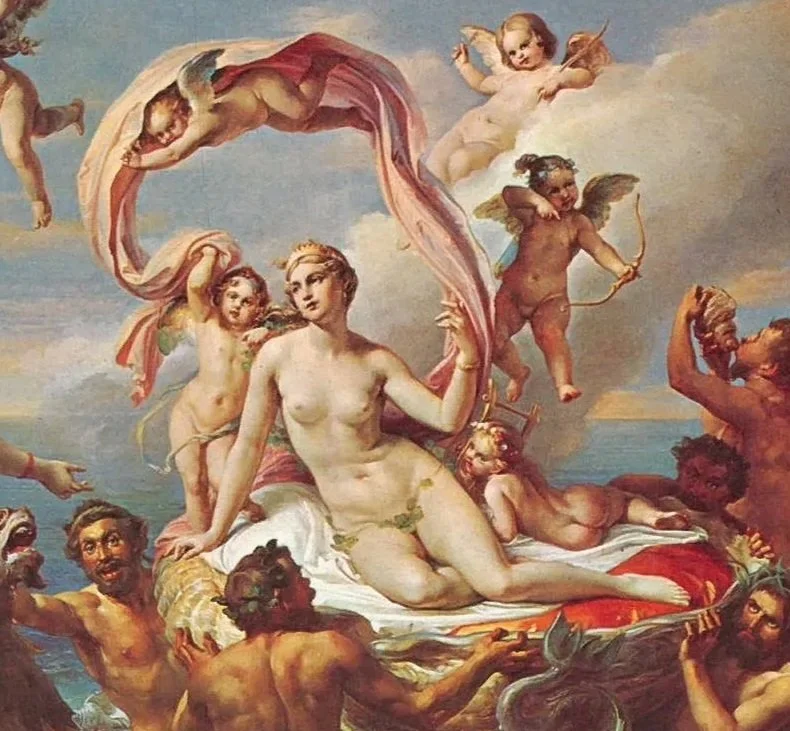
Venus - the frontal lighting & axial placement establish her as the compositional and symbolic focus of the scene, with the surrounding figures oriented toward her rather than the narrative action, reinforcing academic hierarchy of importance in mythological painting.

Detail
Seahorse - the stylised equine sea-creature derives from classical hippocamp prototypes, used in 19th-century academic myth painting to signal dominion over the sea rather than zoological accuracy; its placement beside Venus visually reinforces her authority across the marine realm and marks the procession as sanctioned rather than merely decorative.
Sea nymph - the mounted attendant follows academic conventions in which unnamed marine figures accompany Venus in ceremonial imagery; her elevated position on the hippocamp signals honour and proximity to the goddess, functioning as a visual guide that directs the procession and the viewer’s attention toward Venus.
Detail
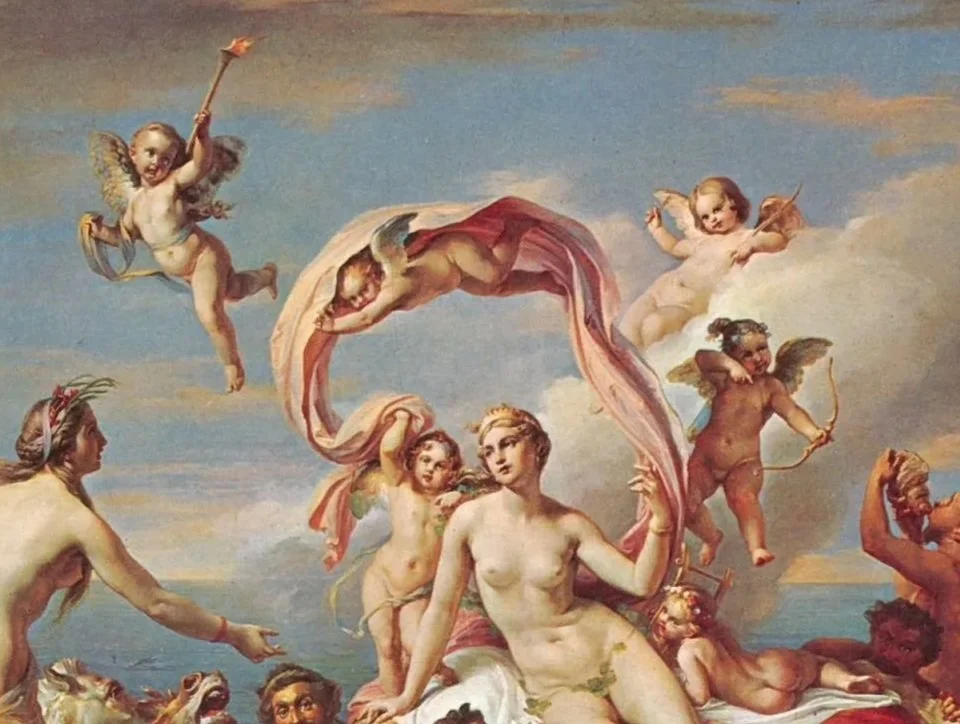
Putti - the airborne and sea-borne children follow Renaissance iconography in which putti serve as markers of divine presence rather than participants in narrative action; their gestures and positions frame Venus as the organising force of the composition, reinforcing her status through ceremonial attendance rather than emotional sentiment.
Detail
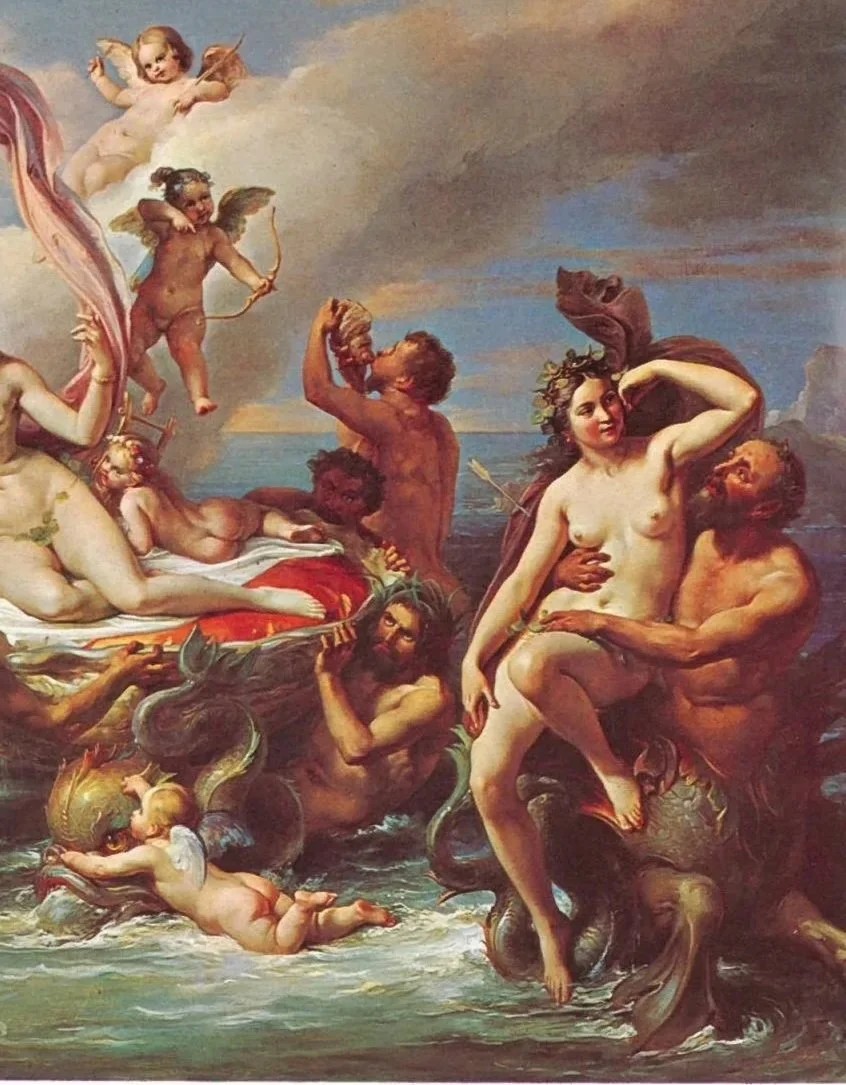
Sea-centaur bearing a woman - the half-human, half-equine creature echoes the classical hippocentaur motif used in mythological triumph imagery to mark the boundary between sea and land, while the woman’s supported posture signals her acknowledgment of Venus’s primacy and places her within the visual hierarchy of the procession rather than as an active protagonist.
Dolphin - represented with rounded head, arched body & curled tail, the stylised form follows the classical convention in which dolphins signal divine protection over sea-voyages rather than biological realism; its presence in the procession identifies the marine realm as cooperating with Venus’s passage, legitimising her movement rather than merely decorating the scene.
