
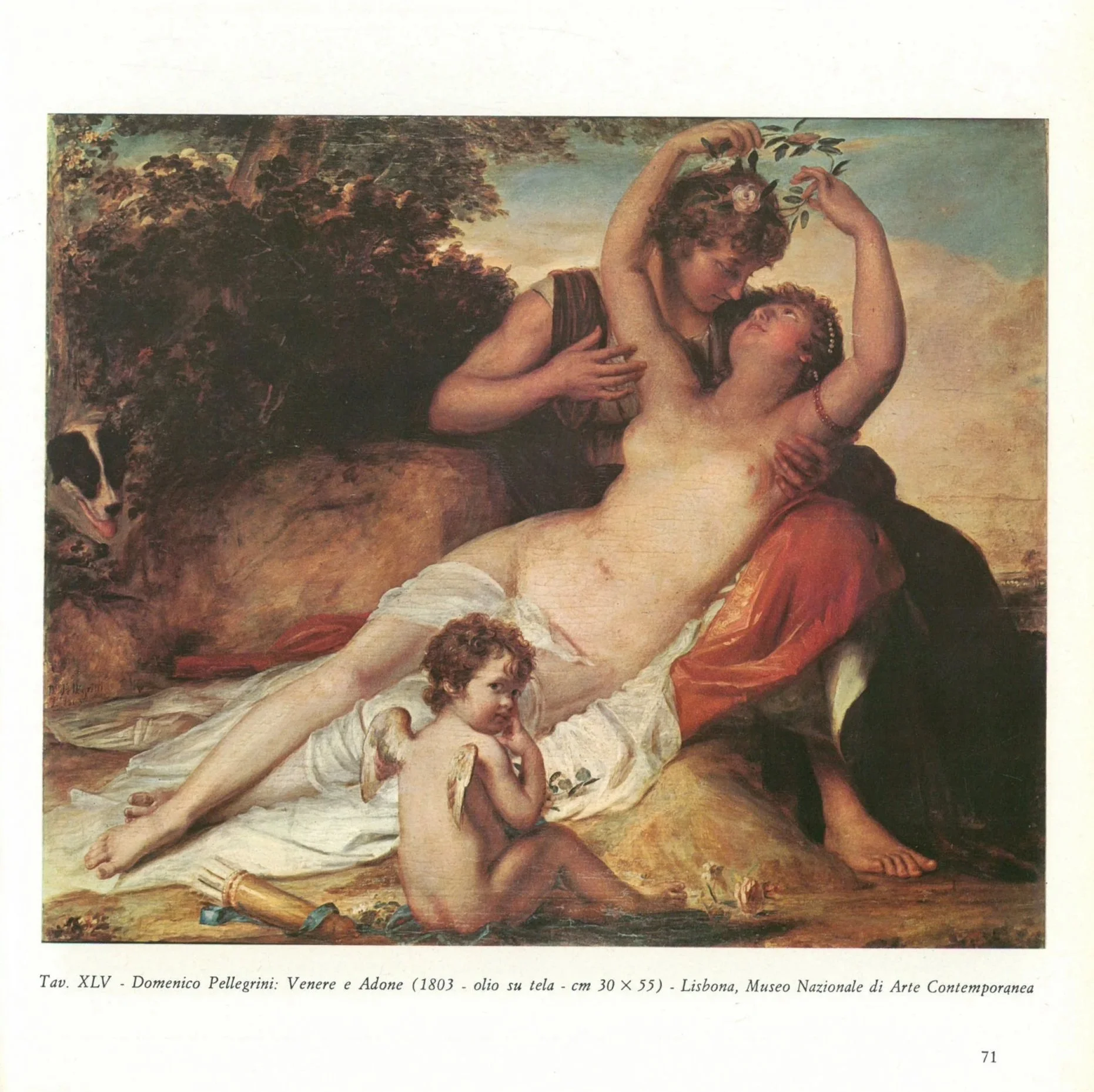
Venus and Adonis - the Wreathing of the Beloved
Domenico Pellegrini · 1803
Oil on canvas
Lisbon, Portugal - National Museum of Contemporary Art
LDA · V · MMXXV
Source
Book · Il Neoclassicisimo nella Pittura Italiana di Angela Ottino Della Chiesa · Fratelli Fabbri Editori · 1967 · p. 71
Pellegrini depicts the mythological lovers in the calm before catastrophe: Venus crowns Adonis with a floral wreath, signalling devotion in the moment that precedes his fatal boar hunt. Adonis appears receptive but unaware of his destiny, while Venus’s gesture of crowning is both affectionate and protective - she tries to fix the moment, as if ritual could hold back fate. Cupid sits nearby, disengaged and contemplative, underscoring that love cannot divert destiny once appointed by the gods. The tension between sensuality and inevitability is central to this myth: beauty does not prevent loss, and the pleasure of union is already haunted by its end. The scene became a recurring subject in decorative and domestic arts as a symbol of passionate love shadowed by fragility.
Reposting welcome; please credit Libreria d’Arte - Studio Soli.
Detail
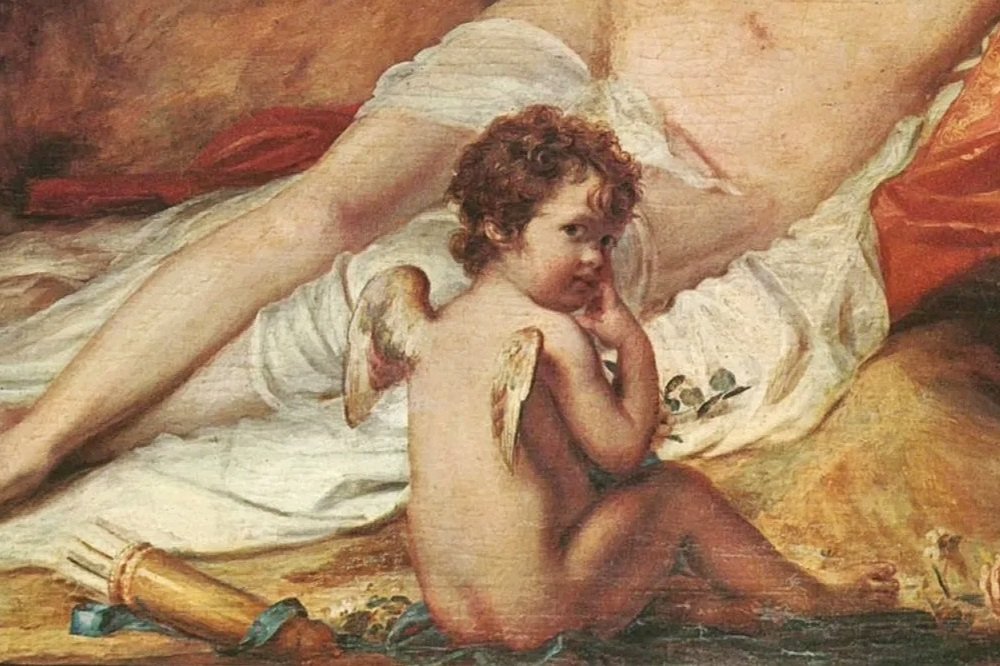
Cupid seated with bow idle - his stillness shows that even the god of love cannot alter destiny once tragedy has been appointed.
Detail
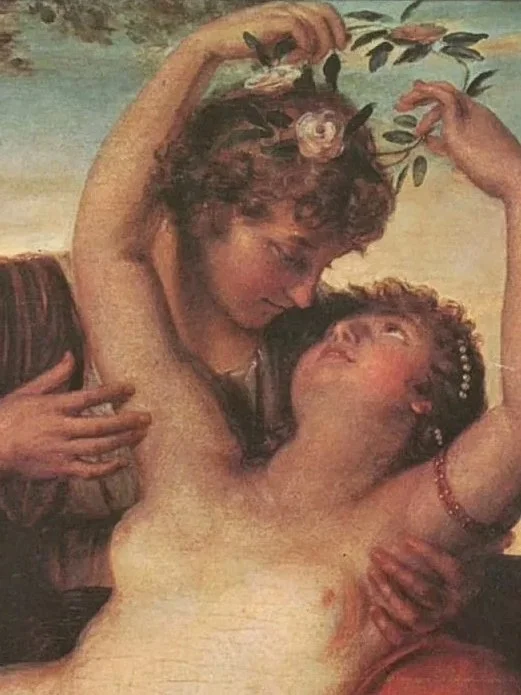
Venus crowning Adonis - the wreath marks devotion & attempts to secure the moment against the fate that soon separates them.

Detail
Cupid with the myrtle branch - myrtle is the evergreen plant sacred to Venus, symbolising erotic love, devotion & the crowning of the beloved, yet it also appears in mourning rites, foreshadowing that their union will be brief. Cupid’s stillness shows that love is present but powerless before fate.

Detail
The armilla of Venus - the sacred armband identifies her as the goddess of love, symbolising beauty, erotic power & the consecration of the beloved, yet it also reflects the tragic truth of the myth: love can crown but cannot protect.
