
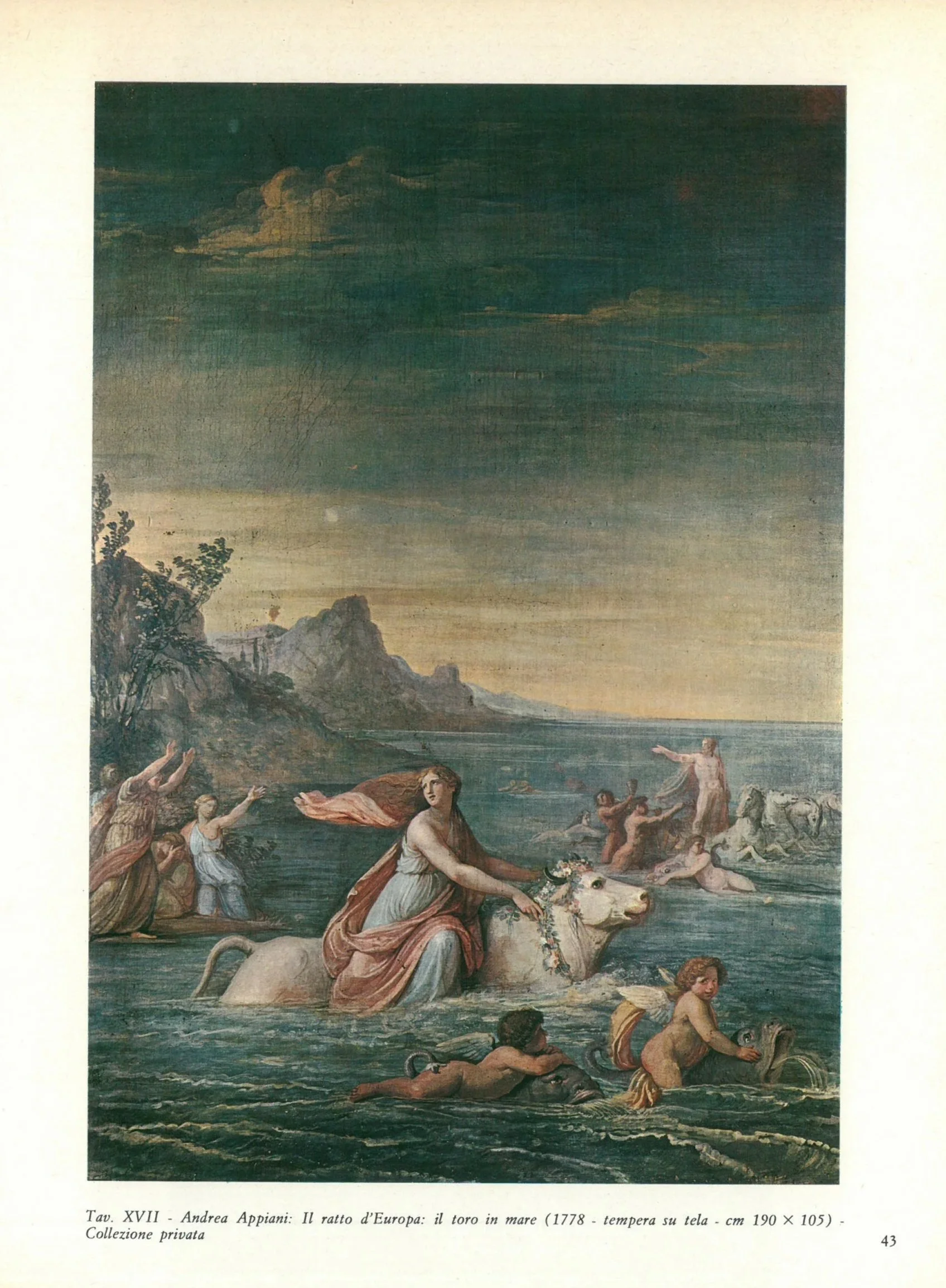
The Abduction of Europa - the Bull in the Sea
Andrea Appiani · 1778
Tempera on canvas
Private collection
LDA · IV · MMXXV
Source
Book · Il Neoclassicisimo nella Pittura Italiana di Angela Ottino Della Chiesa · Fratelli Fabbri Editori · 1967 · p. 43
Appiani depicts the moment from Greek myth in which Zeus, transformed into a white bull, carries Europa across the sea toward Crete. Europa remains composed, not resisting, a convention that emphasizes destiny rather than violence: the abduction is inevitable because it is divine. Her attendants on the shore gesture in alarm, while sea nymphs and putti accompany the crossing, signaling that nature itself participates in the event. The composition uses the diagonal movement of the bull and Europa to merge myth with geography - a journey that establishes the mythic origins of a continent. For later European decorative arts, Europa functioned as a symbol of lineage and cultural identity rather than a narrative episode.
Reposting welcome; please credit Libreria d’Arte - Studio Soli.
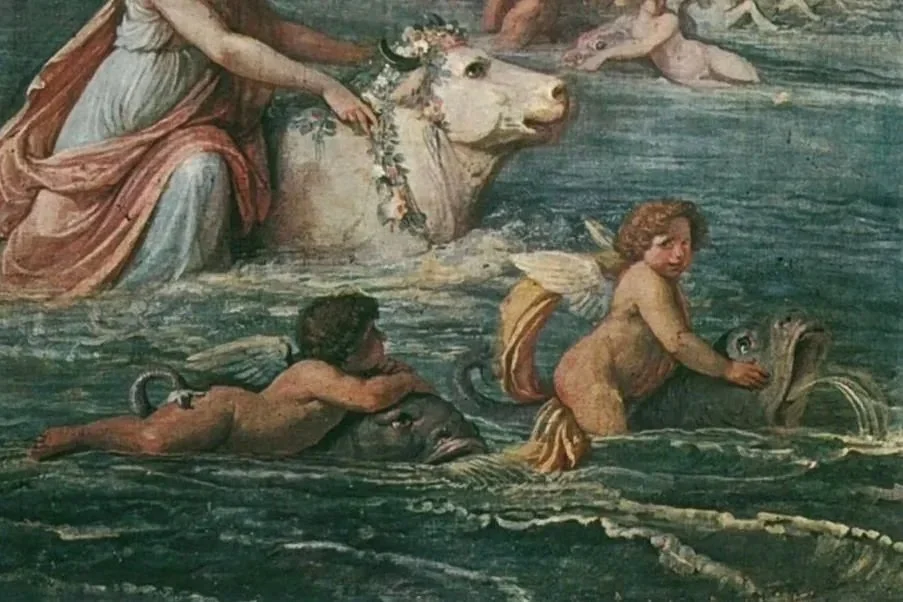
Detail
Putti riding dolphins - in Greco-Roman art, dolphins are stylised with rounded heads & curled tails to signal their mythic role rather than their biology. Their presence marks safe passage under divine protection, & the putti’s play shows the sea cooperating with Zeus’s will, framing the abduction as destined rather than dangerous.
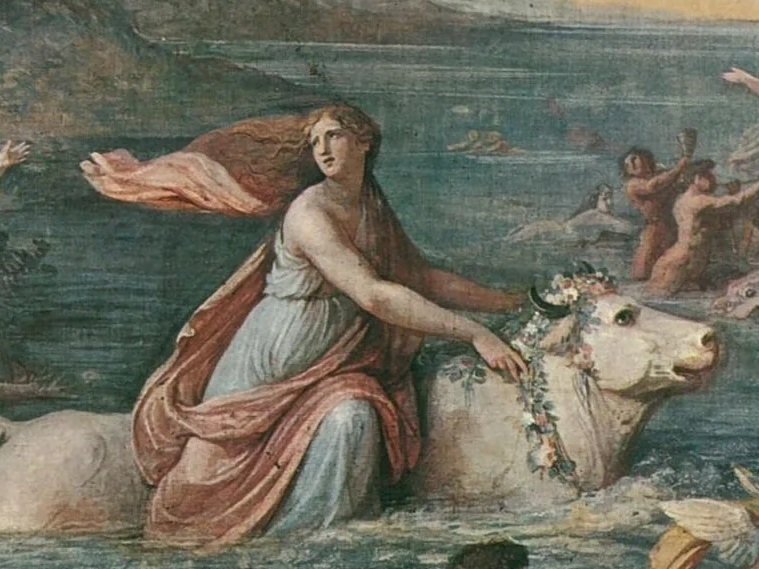
Detail
Zeus as the flower-crowned bull - the god takes a gentle, white bull form marked with floral garlands to signal divine beauty rather than force, expressing that Europa follows by destiny & enchantment rather than fear.
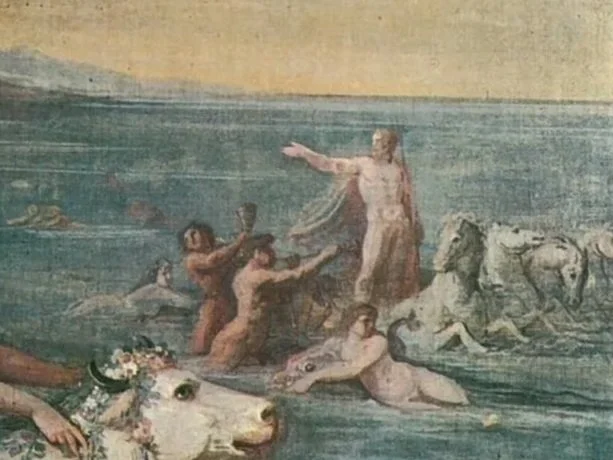
Detail
Triton on sea-horses - the sea-messenger deity guides the crossing, standing on hippocamps (mythic sea-horses with fish-tails) to show mastery of the waves & pointing toward the shore to signal that Europa’s arrival is fated under divine command.
