
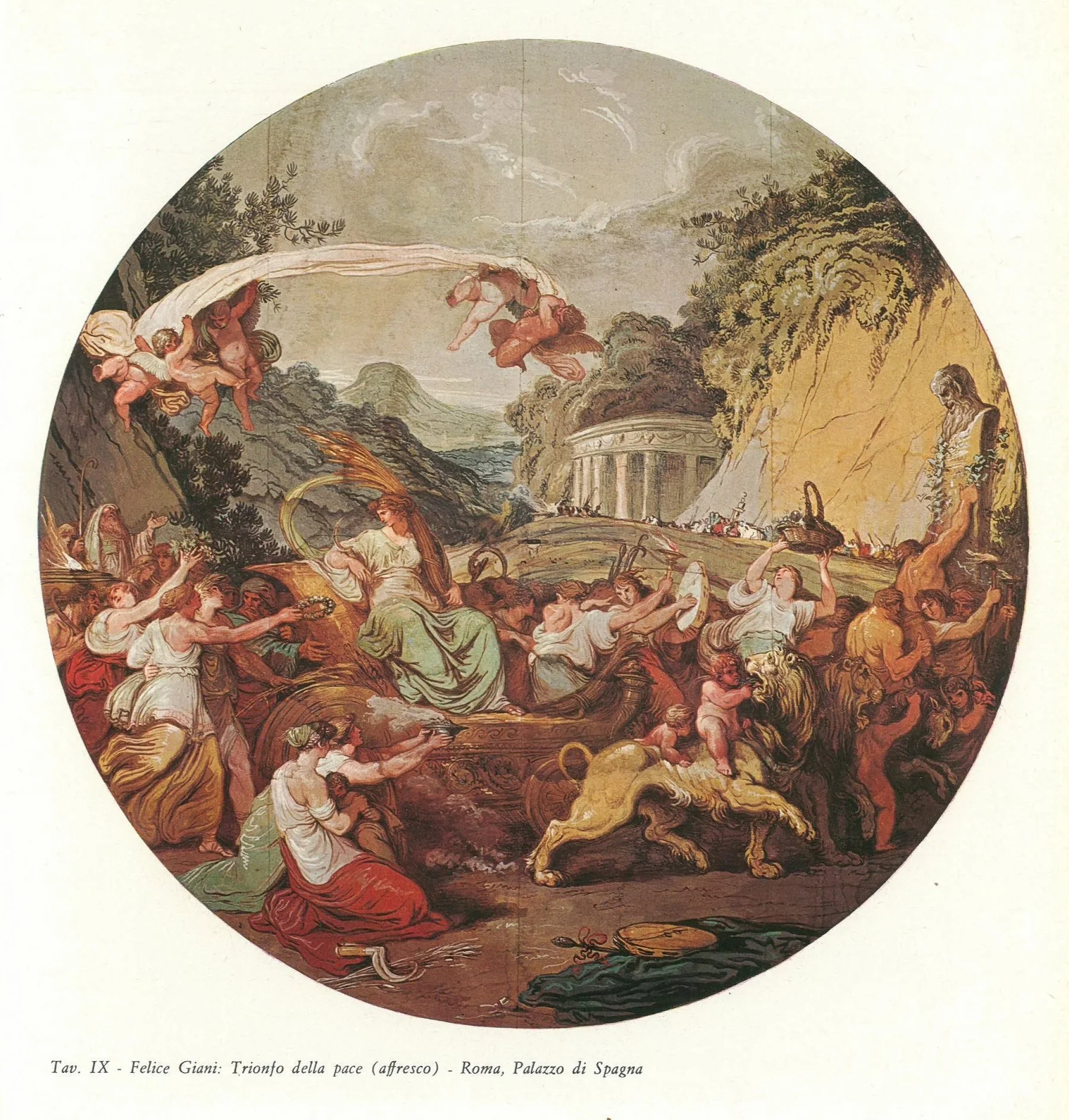
Triumph of Peace
Felice Giani · ca. 1803
Fresco
Rome, Italy - Palazzo di Spagna
LDA · VIII · MMXXV
Source
Book · Il Neoclassicisimo nella Pittura Italiana di Angela Ottino Della Chiesa · Fratelli Fabbri Editori · 1967 · p. 35
Giani personifies Peace as a seated goddess crowned with olive & grain, surrounded by attendants offering symbols of prosperity rather than tribute. The lions flanking her do not guard conquest but lie pacified, expressing that true peace subdues violence without force. Putti clear the sky & carry garlands to complete the transformation of the landscape from wilderness to cultivation, connecting peace with fertility & abundance. The temple in the distance represents civic harmony rather than divine worship - a state of order made possible by peace rather than imposed by authority. While the fresco operates primarily in the mythological register, its placement in an early 19th-century Roman palace also reflects a political hope of the period: that peace would allow civic prosperity to flourish after decades of conflict.
Reposting welcome; please credit Libreria d’Arte - Studio Soli.
Detail
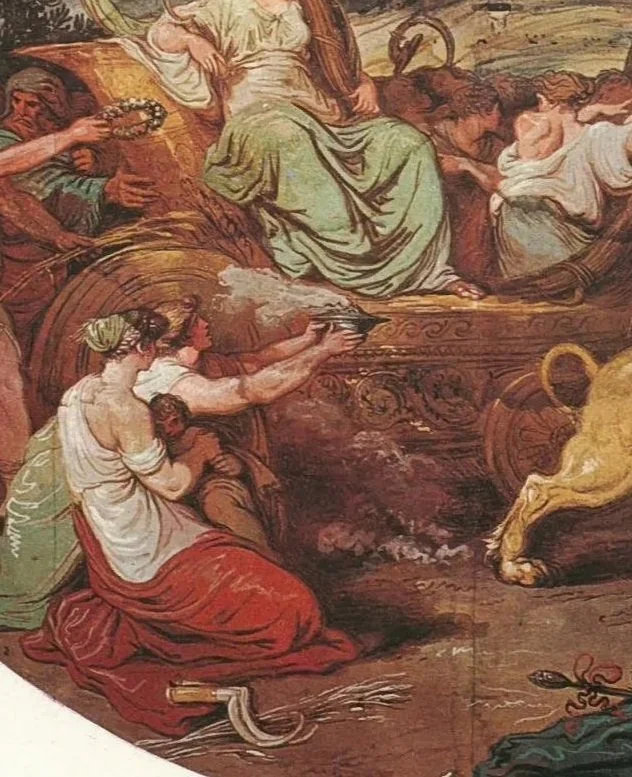
Fertility & Labor - the man and woman with wheat and a child offer a smoking vessel in gratitude, symbolising that peace is fulfilled not by the absence of conflict but by the return of domestic prosperity & generational wellbeing.
Detail
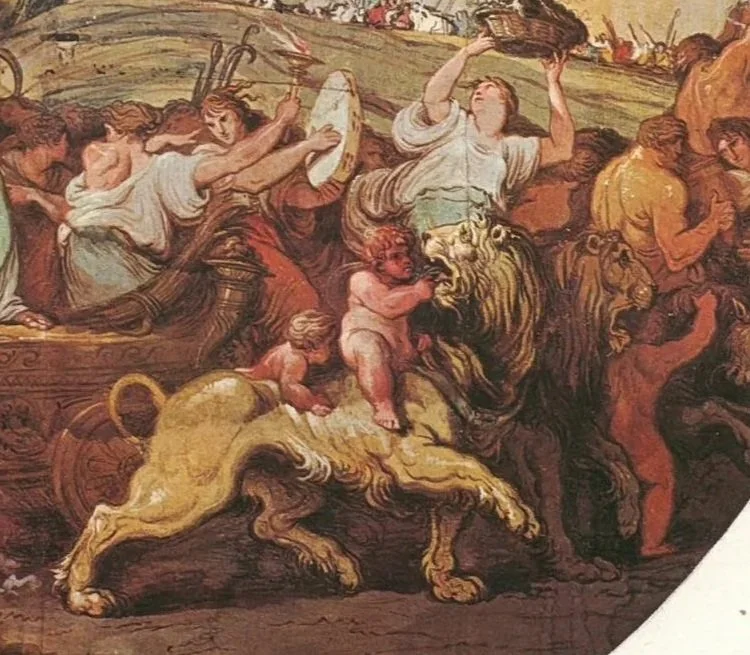
Pacified lions - power tamed rather than destroyed, symbolising that peace neutralises violence & makes strength serve the common good.
Detail
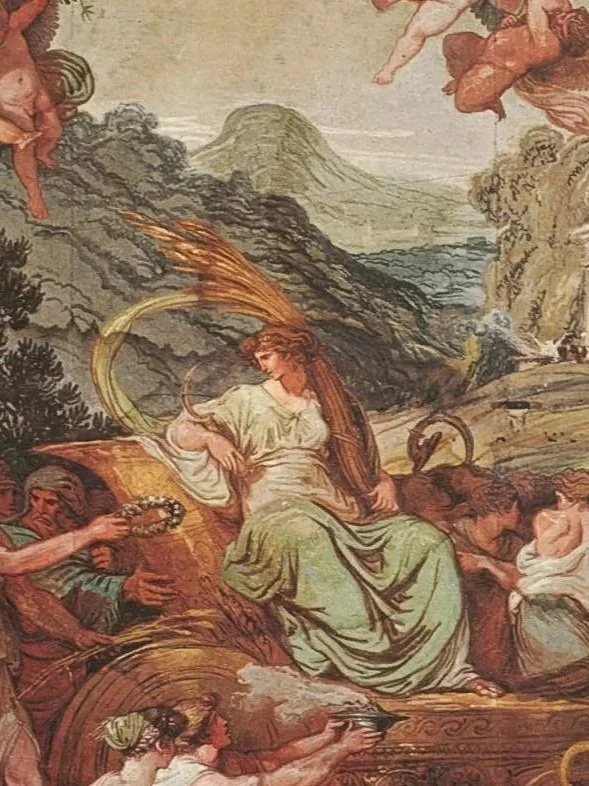
Peace enthroned - the figure crowned with olive & grain embodies harmony that fosters prosperity rather than victory that dominates.
