
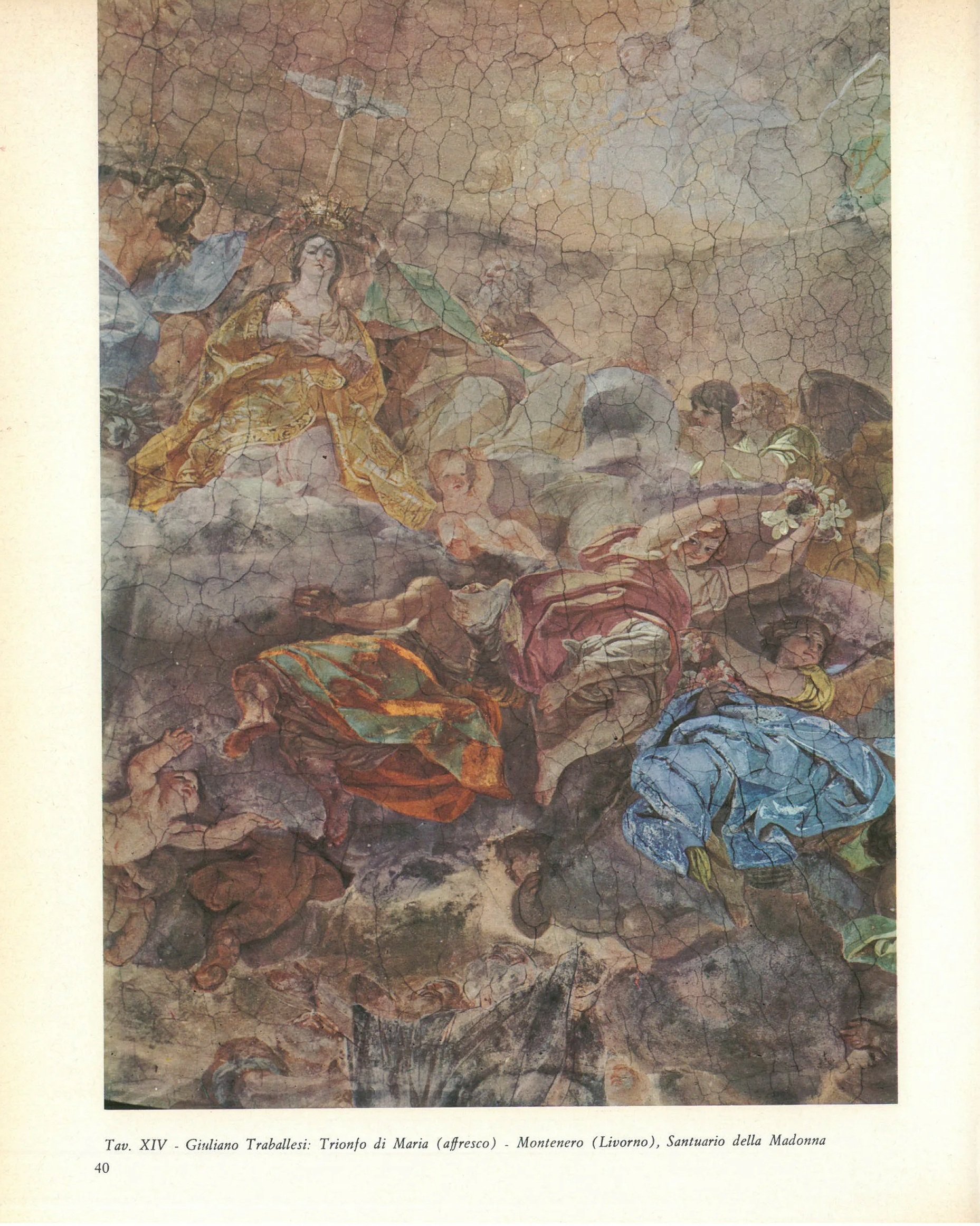
Triumph of Mary
Giuliano Traballesi · ca. 1770
Fresco
Montenero, Italy - Santuario della Madonna
LDA · VII · MMXXV
Source
Book · Il Neoclassicisimo nella Pittura Italiana di Angela Ottino Della Chiesa · Fratelli Fabbri Editori · 1967 · p. 40
Traballesi depicts the Triumph of Mary as an ascent to sovereignty, where the Virgin occupies the highest register of the composition, crowned & enthroned among clouds rather than placed within earthly architecture. Surrounding figures illustrate her titles rather than narrative episodes: Justice at her left, Charity with the children below, & Faith receiving light from above. The golden mantle identifies Mary as Regina Coeli - Queen of Heaven - not through the symbols of earthly monarchy, but through elevation above saints & angels and the radiance of divine favor. The putti act as messengers between registers, reinforcing Mary’s function as intercessor between the human world & the celestial one. In 18th-century Italy, Marian triumph scenes translated theological doctrine into a shared visual language, communicating collective identity through symbols rather than personal devotion.
Reposting welcome; please credit Libreria d’Arte - Studio Soli.
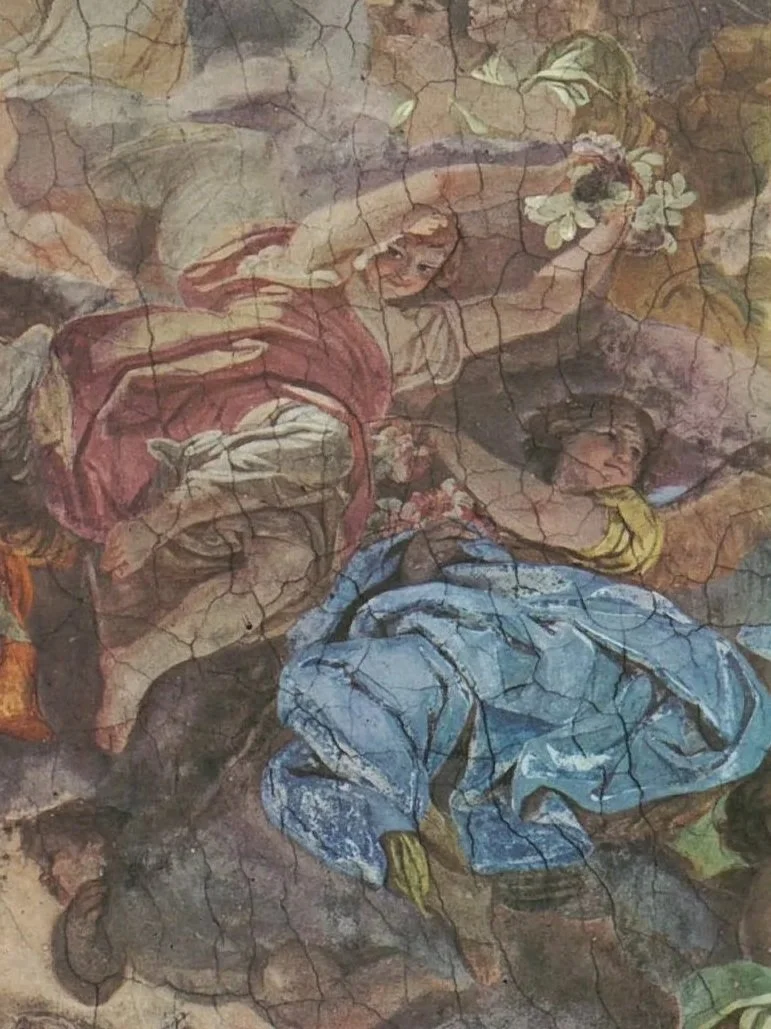
Detail
Putti bearing flowers - angelic intermediaries who connect registers of the fresco, signifying Mary’s intercessory role between celestial & earthly realms.
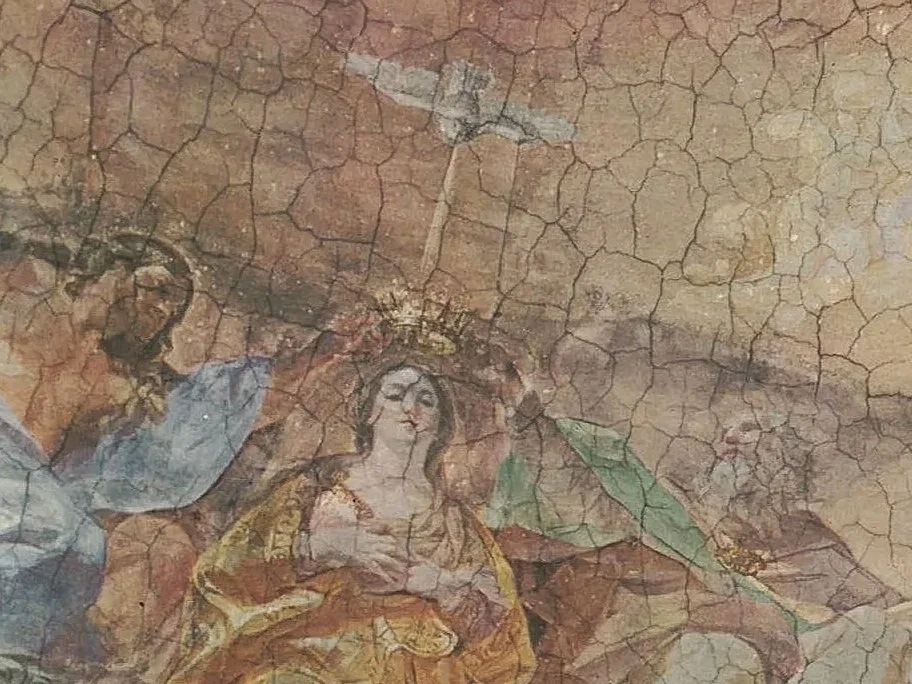
Detail
Crowning of Mary - angels raise the crown while the Holy Spirit (in the form of a dove) authorises it with light.
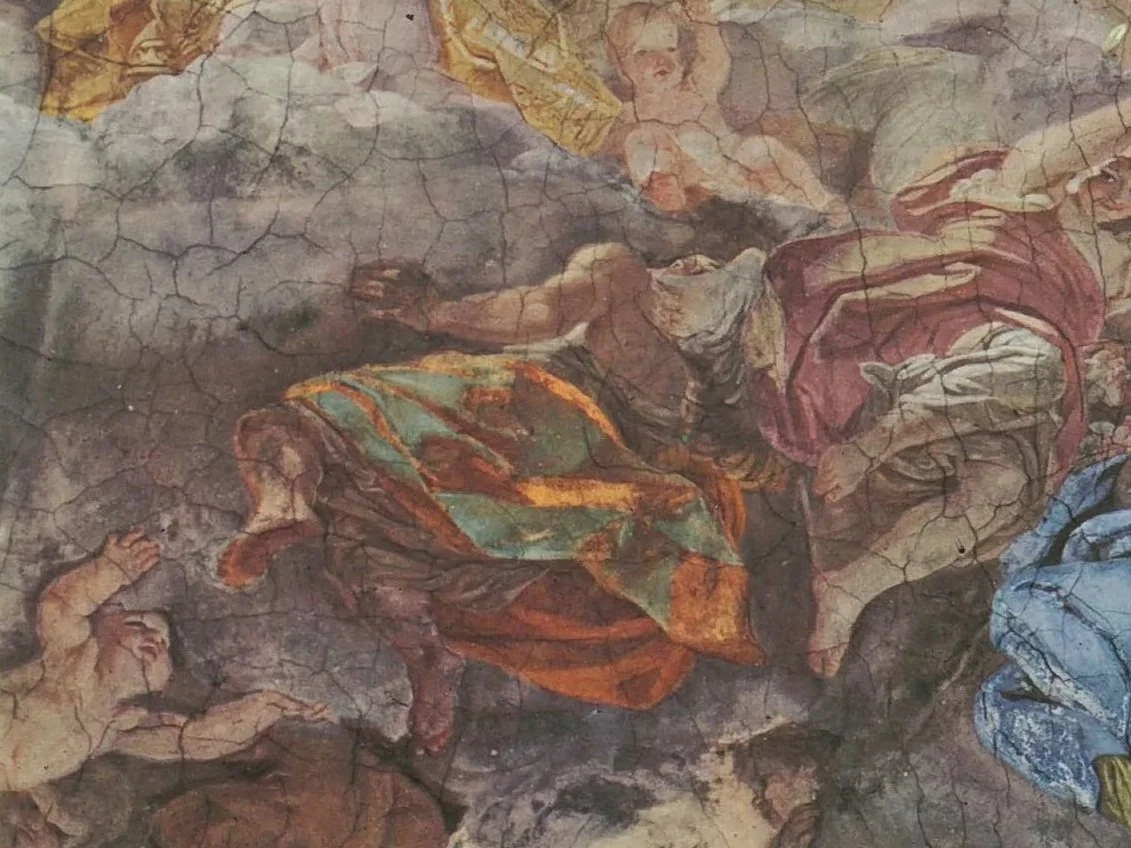
Detail
Charity beneath Mary - the virtue in the orange mantle surrounded by children expresses selfless love & reveals that Mary’s sovereignty is founded not on power, but on compassion exercised for humanity. Charity is consistently identified in Baroque & Rococo Marian iconography by her warm-toned robe & maternal posture with children at her side.
