
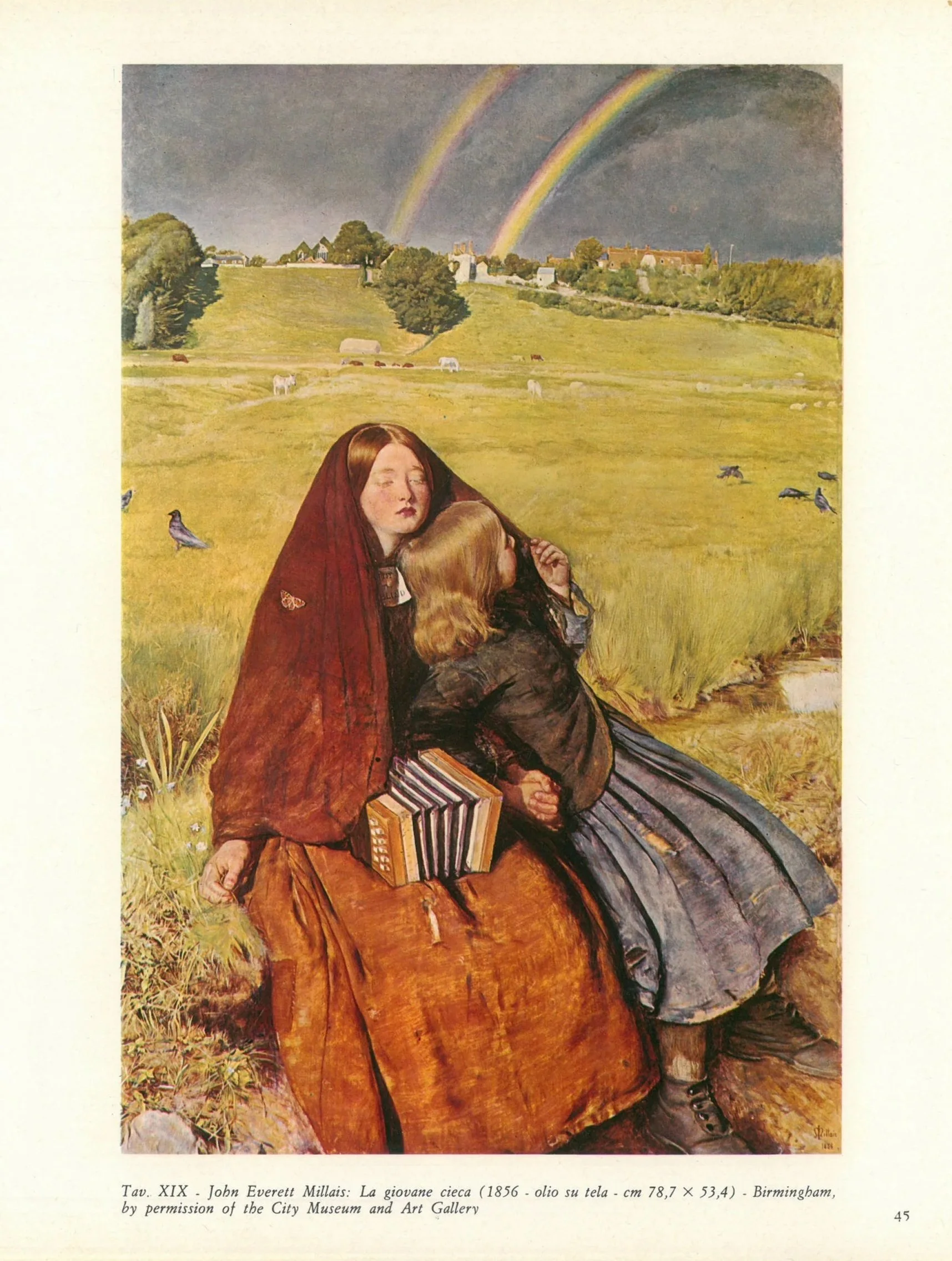
The Blind Girl
John Everett Millais · 1856
Oil on canvas
Birmingham, United Kingdom - City Museum and Art Gallery
LDA · XVIII · MMXXV
Source
Book · I Preraffaelliti di Renato Barilli · Fratelli Fabbri Editori · 1967 · p. 45
The work depicts two sisters resting in a rural landscape, one blind and one sighted. In Victorian art, blindness often represents inward or spiritual perception rather than deprivation. The double rainbow functions as a visual symbol of divine covenant and revelation, present in the world of the sighted but inaccessible to the blind figure except through the mediation of her sister. The butterfly brooch has an art-historical association with the soul and personal transformation, reinforcing the theme of non-physical perception. The lush landscape contrasts external visual abundance with internal forms of understanding, a common symbolic construct in mid-19th-century British allegorical painting.
Reposting welcome; please credit Libreria d’Arte - Studio Soli.
Detail
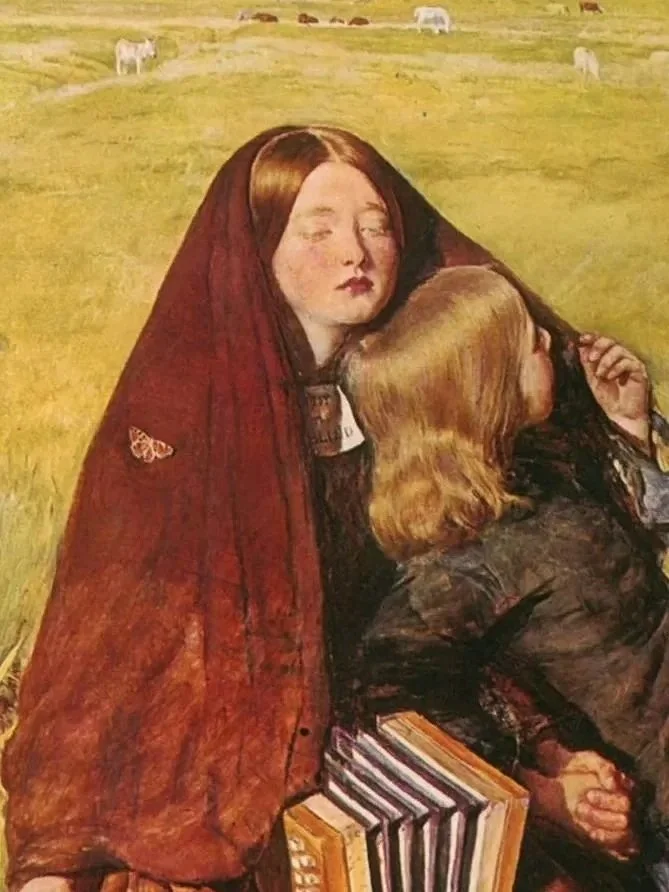
Buttferly brooch - common 19th-century emblem of the soul & transformation, indicating a symbolic dimension beyond literal sight
Detail
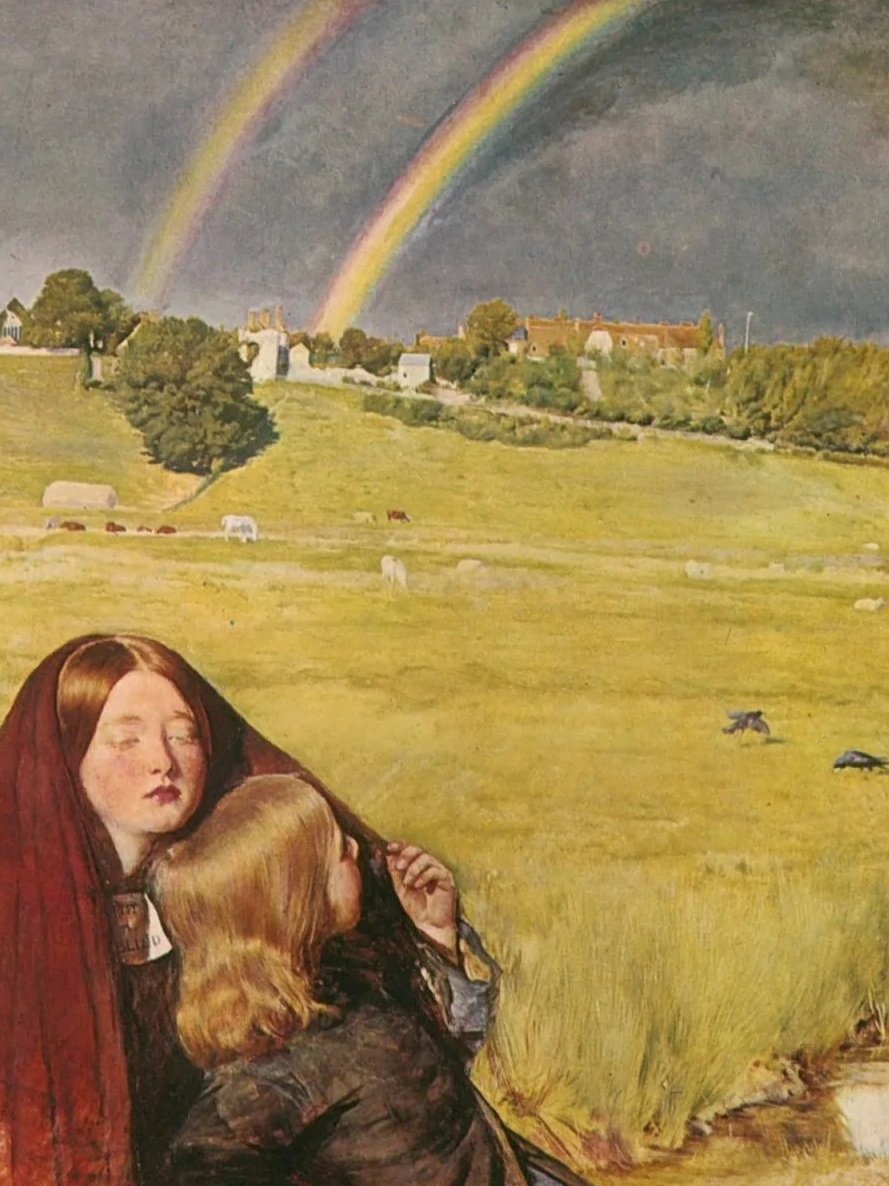
Double rainbow - motif associated with divine covenant & visual revelation, used here to contrast external visibility with the theme of inner perception
