
Woman with Lekythos - Terracotta Figurine
Greek, Tanagra type · Boeotia (Tanagra) · Late 4th century BC
Terracotta · Height 26.3 cm
ADR · III · MMXXVI
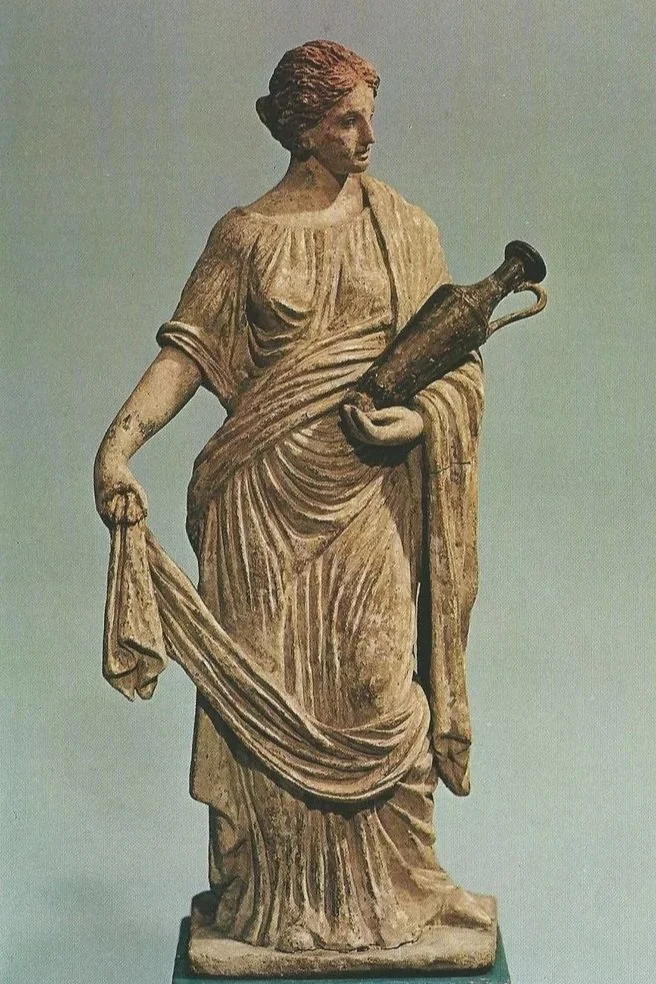
A Tanagra figurine is a small molded terracotta sculpture produced for domestic, funerary, or votive use. This example shows a standing woman holding a large lekythos against her left side while lifting the edge of her mantle with her right hand. A lekythos is a narrow-necked vessel used to store and pour perfumed oil, commonly associated with personal care and with offerings placed in graves. The figure wears a thin chiton covered by a mantle arranged in dense, rhythmic folds that emphasize the vertical stance. The head turns slightly to one side, with softly modeled features and centrally parted hair gathered at the back. The figure stands on a small rectangular base.
The type reflects the influence of late Classical sculpture in its controlled pose, balanced proportions, and refined surface treatment associated with the sculptural tradition of Praxiteles. Tanagra workshops produced such figures using molds, with details finished by hand and the surface coated with a white slip and mineral pigments. These terracottas functioned as decorative objects in domestic settings and as grave offerings, and they provide visual evidence for contemporary dress, gesture, and social representation in the Hellenistic period.
Detail
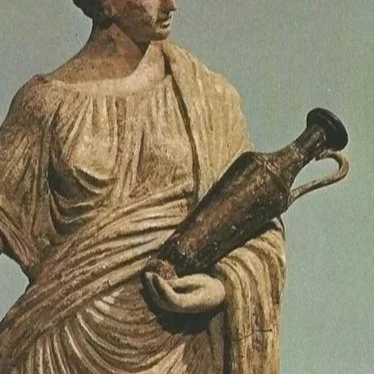
Lekythos
The vessel held at the figure’s side is a lekythos, a tall, narrow oil flask with a cylindrical body, slender neck, and small mouth. The handle connects the shoulder to the neck. Lekythoi were used to store perfumed oil for personal grooming and were also placed as offerings in graves. The scale and careful modeling of the vessel emphasize its symbolic and practical association with funerary practice.
Detail
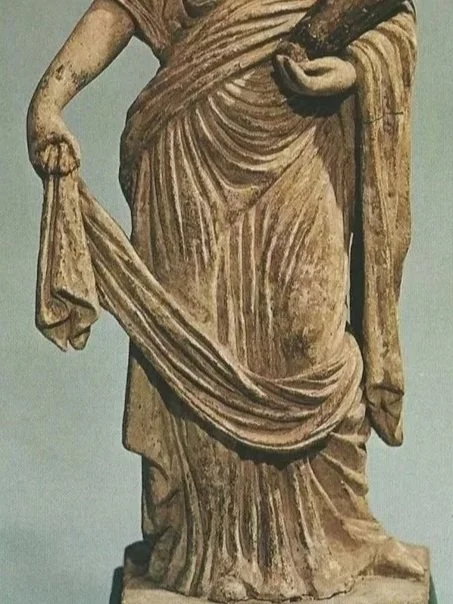
Drapery
The mantle falls over the chiton in dense, layered folds that create a continuous vertical rhythm across the body. The fabric clings lightly in some areas and gathers more heavily in others, indicating weight and movement while reinforcing the upright stance. Traces of surface coating suggest the original use of polychromy, the application of multiple painted colours to the sculpture, a standard finishing practice for Tanagra terracotta figures.
