
Ulysses Discovering Achilles Among the Daughters of Lycomedes
Francesco Hayez · ca. 1820
Oil on canvas
Venice, Italy - Palazzo Treves, Private Collection
LDA · XXXI · MMXXV
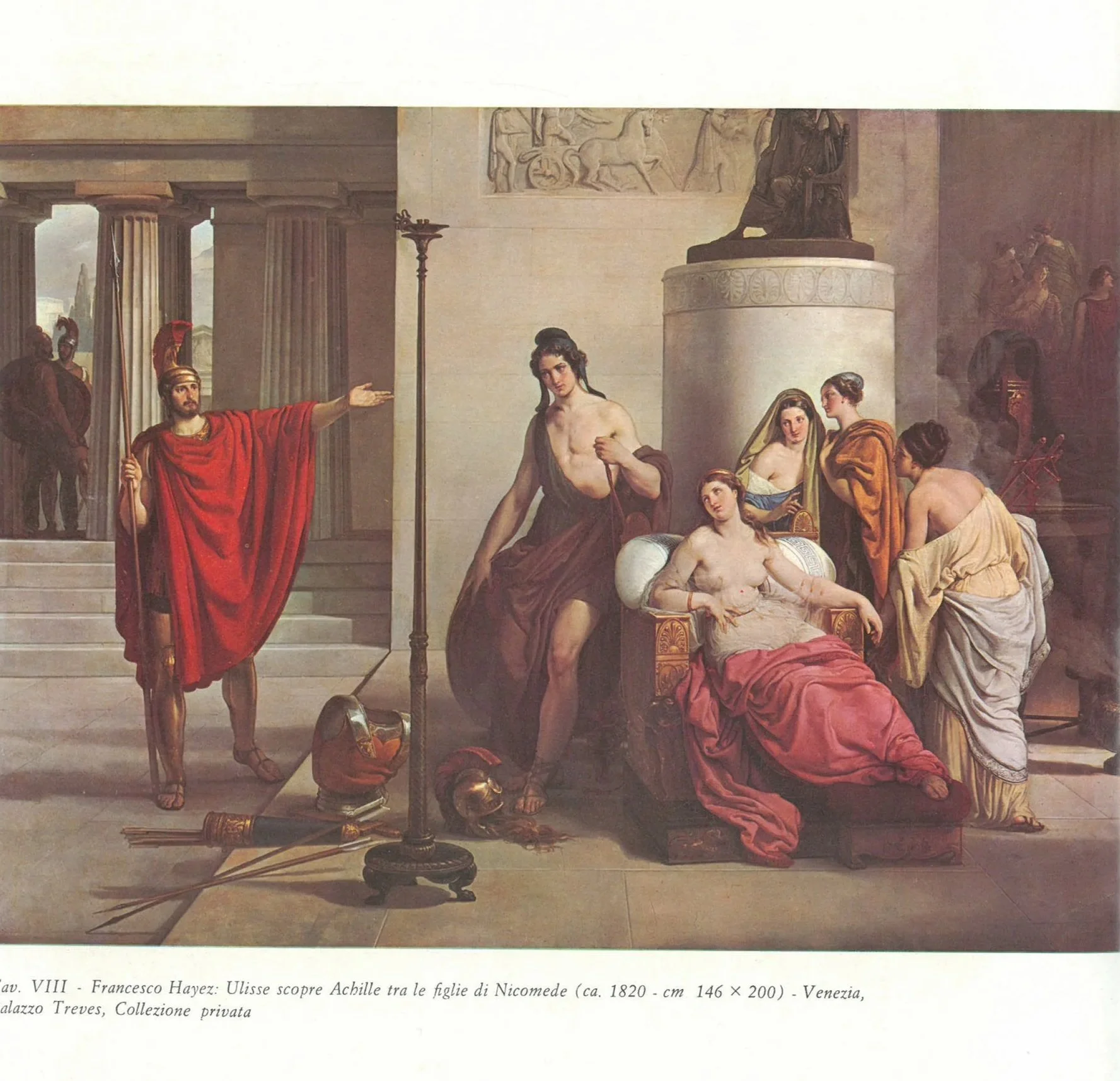
Source
Book · La Pittura Veneta dell’Ottocento · Fratelli Fabbri Editori · 1967 · p. 34
Hayez depicts the moment in Greek myth when Ulysses reveals the identity of Achilles, who has been living in disguise among the daughters of King Lycomedes to avoid the Trojan War. The contrast between feminine dress and make physique underscores the inevitability of Achilles’ martial destiny, reflected visually through the presence of armour and weapons at his feet. Classical architectural elements and sculptural references frame the scene within an idealised antiquity, reinforcing the narrative as one of fate, lineage and the inescapability of heroic role.
Reposting welcome; please credit Libreria d’Arte - Studio Soli.
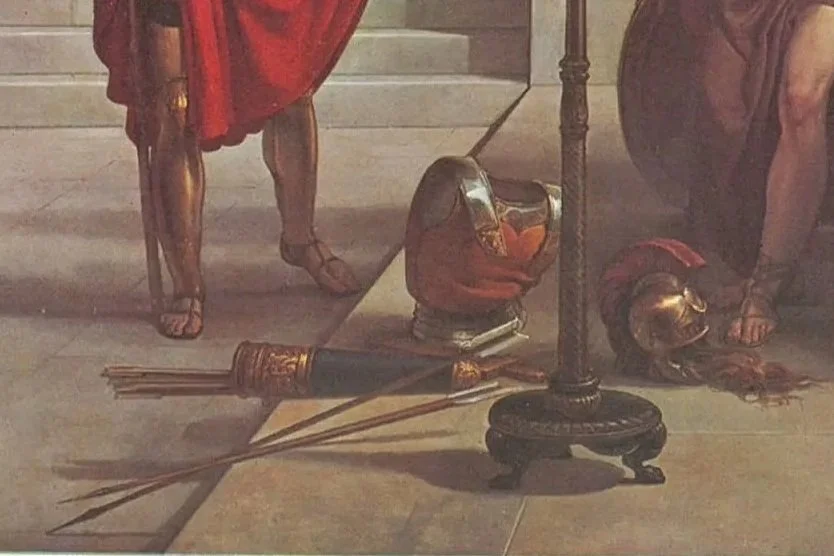
Detail
Weapons and shield - the instruments of warfare positioned as markers of destiny, indicating the role Achilles is destined to resume despite previous concealment
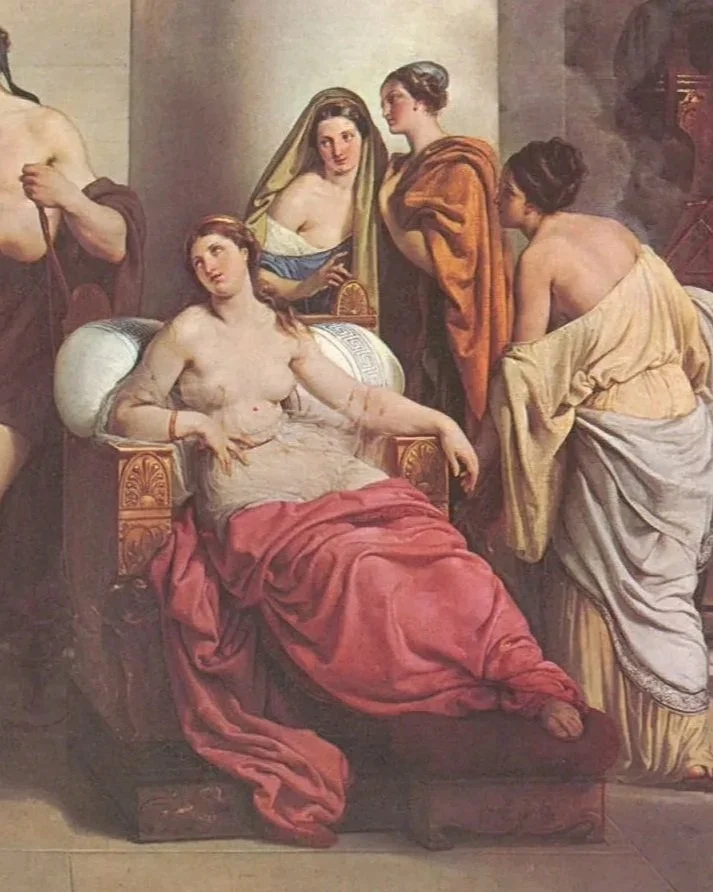
Detail
The seated woman - a witness figure positioned to observe the action without participating in it, a common device in 19th-century history painting that establishes the event as something presented for recognition rather than reaction

Detail
Incense smoke - a signifier of ritual space in classical settings, used in antiquity to indicate purification and the presence of ceremonial activity
