
The Apotheosis of Aeneas
Giuseppe Velasco · ca. 1783
Fresco
Palermo, Italy - Villa Belmonte
LDA · XII · MMXXV
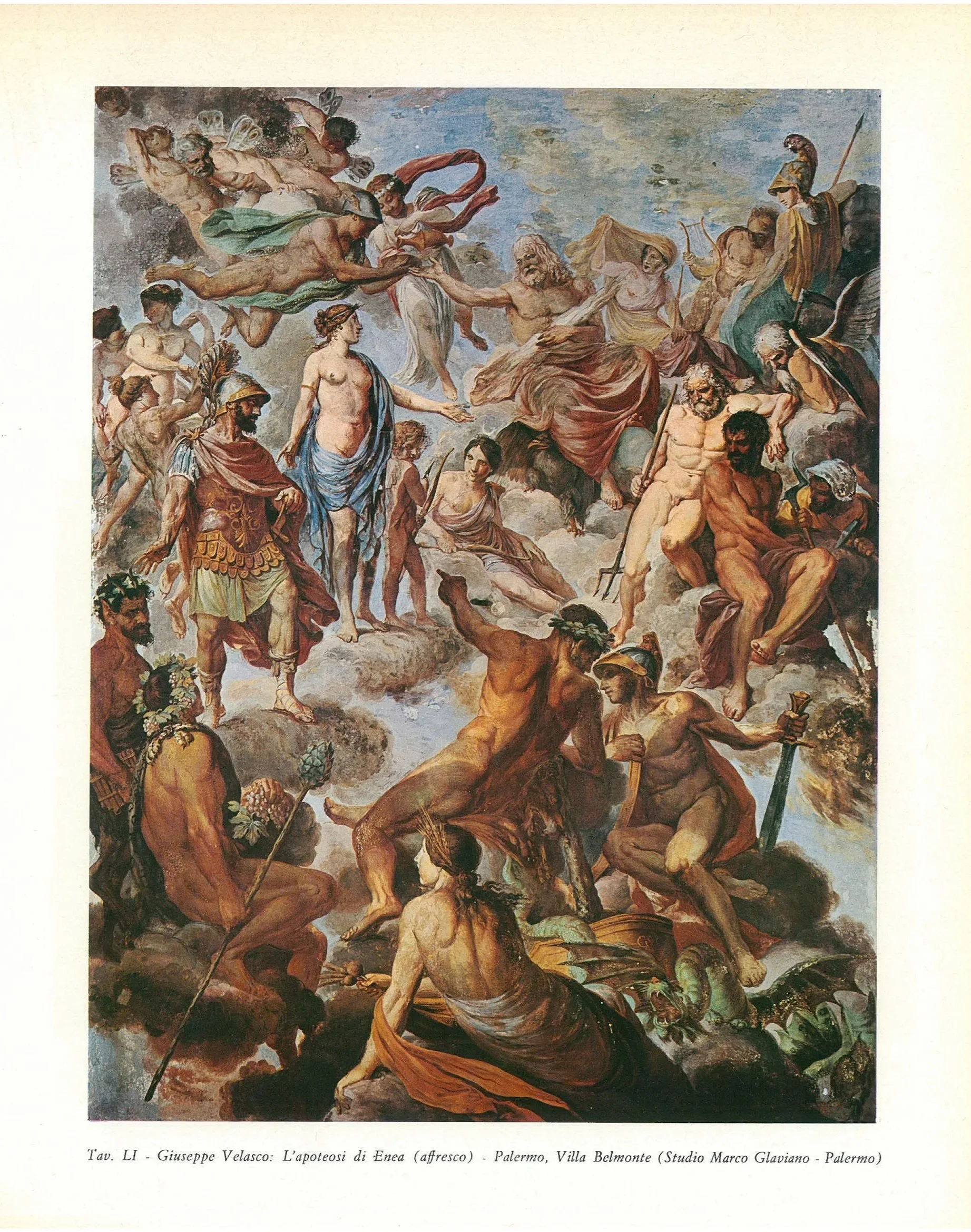
Source
Book · Il Neoclassicisimo nella Pittura Italiana di Angela Ottino Della Chiesa · Fratelli Fabbri Editori · 1967 · p. 77
Aeneas stands at the centre of the composition as the gods of Olympus assemble to receive him, completing his transformation from mortal hero to divine figure - the final chapter of the Aeneid. To the right sits Jupiter, enthroned and presiding over Aeneas’ elevation, while Neptune and Minerva signal the joining of military power and maritime dominion that shaped Rome’s identity. Venus, Aeneas’ mother, stands close to him, emphasising his divine lineage and the legitimacy of his ascent. Winged figures crown him with immortality, a visual shorthand for the approval of the heavens. The fresco reflects late-18th-century fascination with Rome’s founding myth - a reminder that political authority was believed to descend from divine ancestry.
Reposting welcome; please credit Libreria d’Arte - Studio Soli.
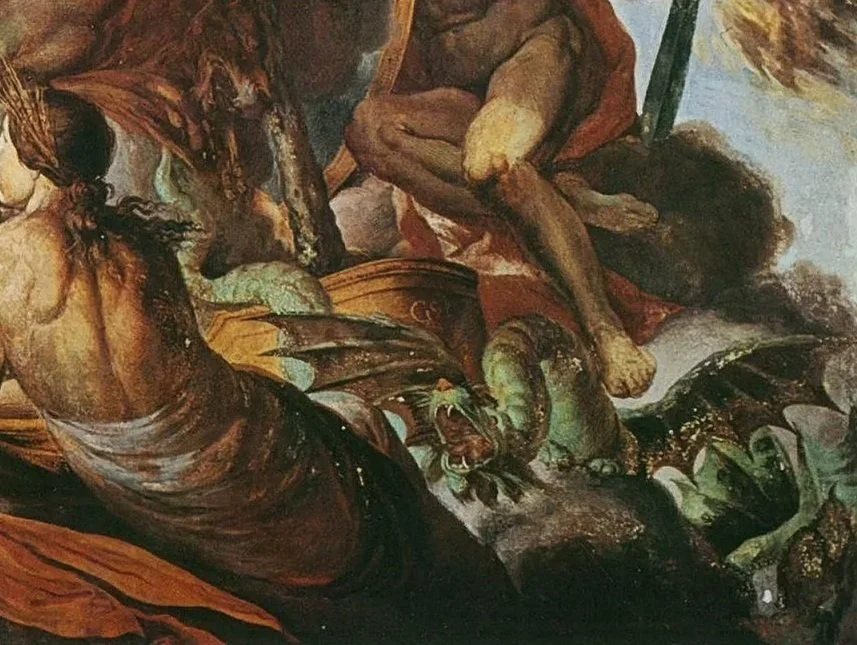
Detail
The dragon beneath the gods - a symbol of chaotic, pre-civilised forces that Aeneas must rise above. Its position at the lowest register contrasts with the celestial assembly above, reinforcing the idea that the hero’s ascent is not only a reward but a conquest over disorder, violence & earthly threat. In classical imagery, serpents & dragons often represent the dangers of the mortal world that a hero must overcome before attaining immortality.
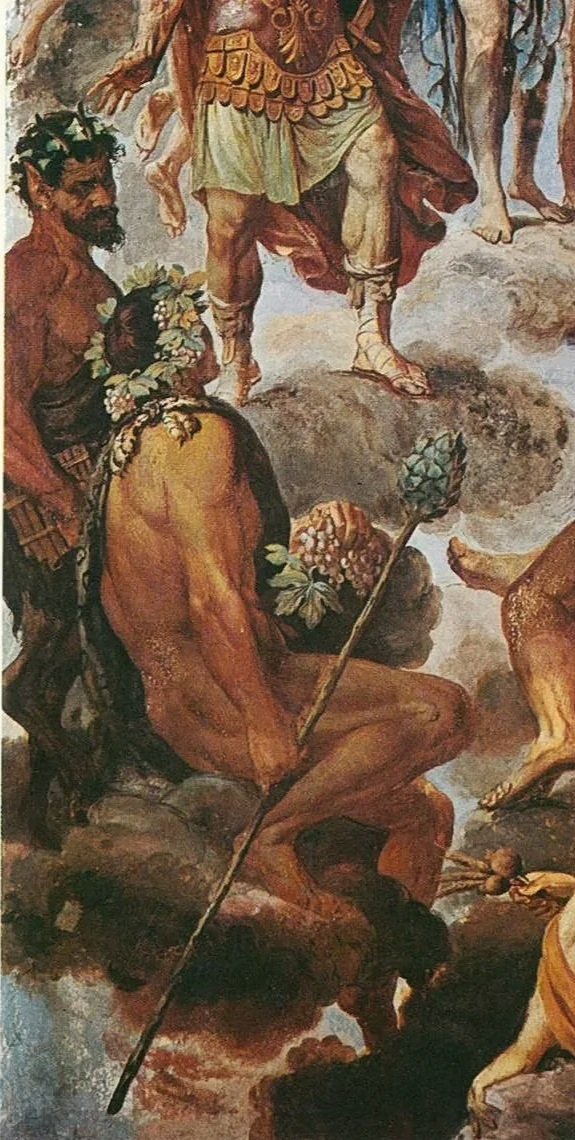
Detail
Personifications of Victory & Honour - the attendants with laurel wreaths and floral garlands commemorate Aeneas’ earthly triumphs, showing that his elevation is not granted by birth alone but earned through heroic deeds & recognised before being confirmed by the gods. Positioned at the lowest celestial tier, they mark the threshold between the mortal world and Olympus, indicating that honour from humanity precedes immortality bestowed by the divine.
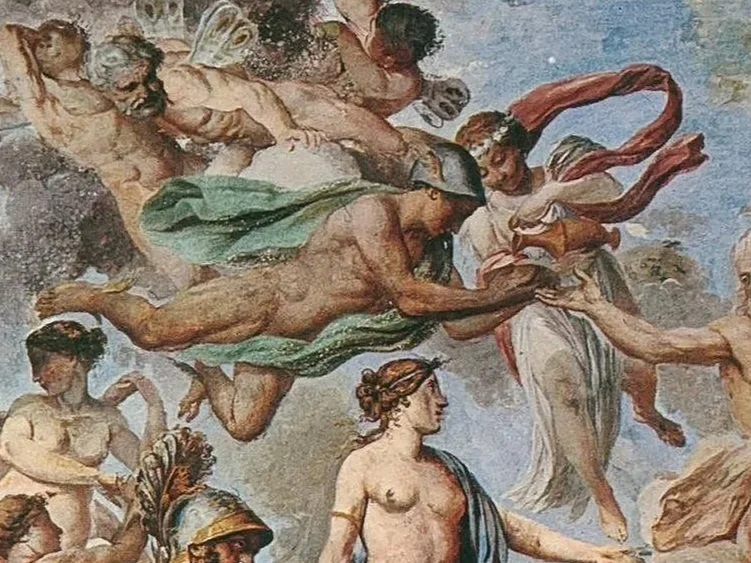
Detail
Hermes (Mercury) with winged helmet & ankles presents the vessel of nectar to Zephyr (Zéphyrus) - god of the West Wind. The ritual that formally grants immortality, showing Hermes acting not as messenger but as psychopomp, guiding Aeneas across the threshold between mortal life & divine eternity.
Zephyr extending the cloud-like wind toward Hermes - the god of the West Wind creates the current that lifts Aeneas toward Olympus, working in tandem with Hermes to mark the threshold where mortal life ends & divine existence begins. In apotheosis scenes Hermes guides the soul while Zephyr carries the body upward, expressing that Aeneas is not only accepted among the gods - the very forces of the air assist in his ascent.
Detail
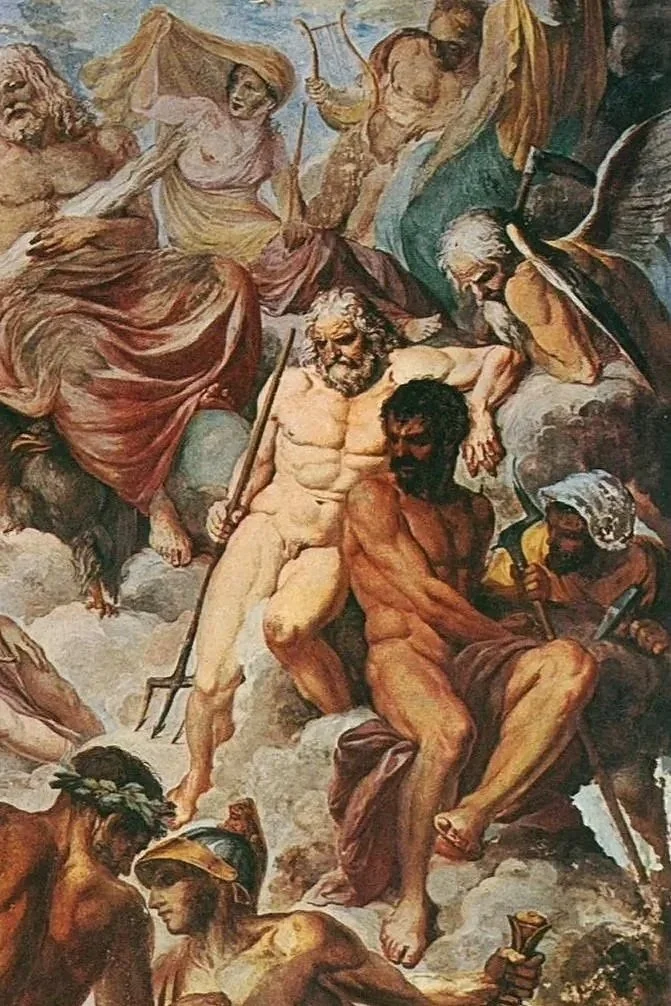
Neptune with the trident - the god of the sea observes Aeneas’ elevation without intervening, symbolising that the perils of the voyage from Troy are behind him & that the realm of the sea releases the hero as he crosses into divine immortality.
Detail
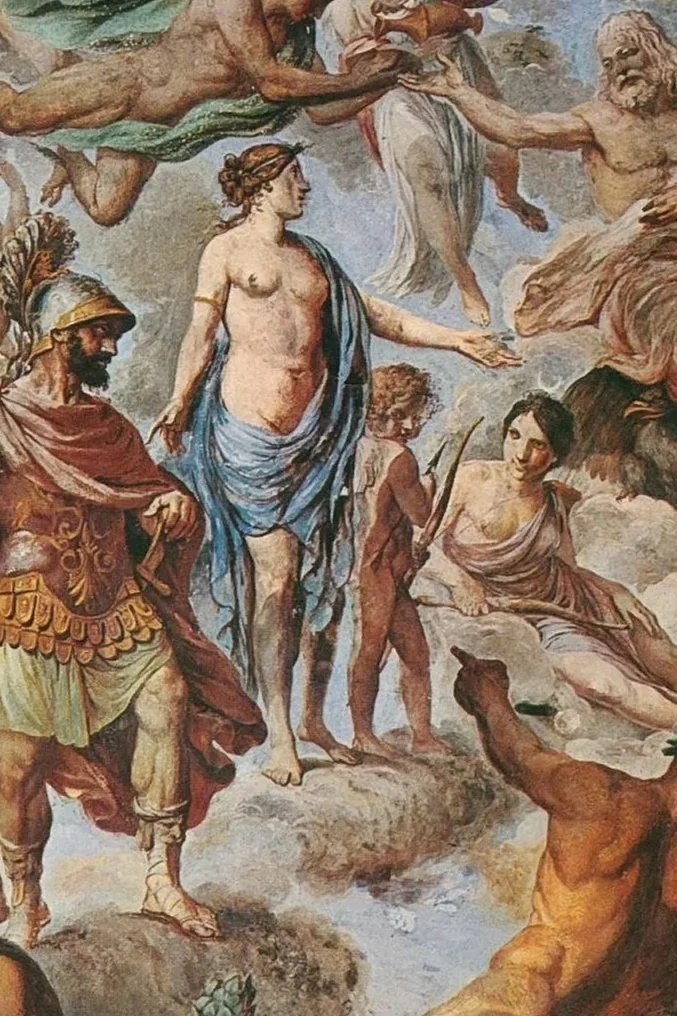
Venus with Cupid - the goddess stands close to her son as he ascends, affirming the divine lineage that makes Aeneas worthy of immortality, while Cupid’s upward gaze confirms that the founding hero of Rome (Aeneas) is received by the gods through both achievement & ancestry.
Detail
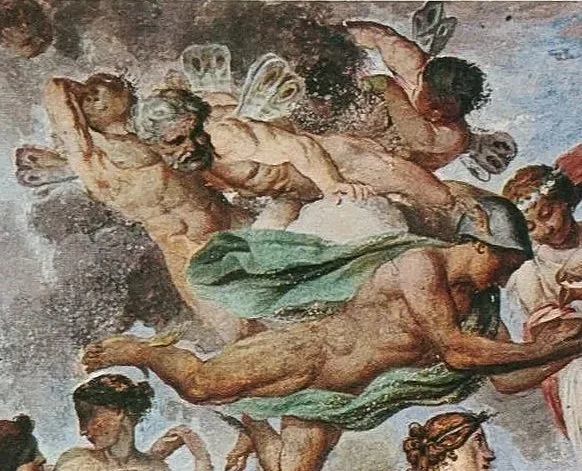
Psyches with butterfly wings - personifications of the immortal soul watching from the upper realm, signifying that Aeneas is entering the domain where souls live eternally & confirming the final stage of his transformation into a god.
