
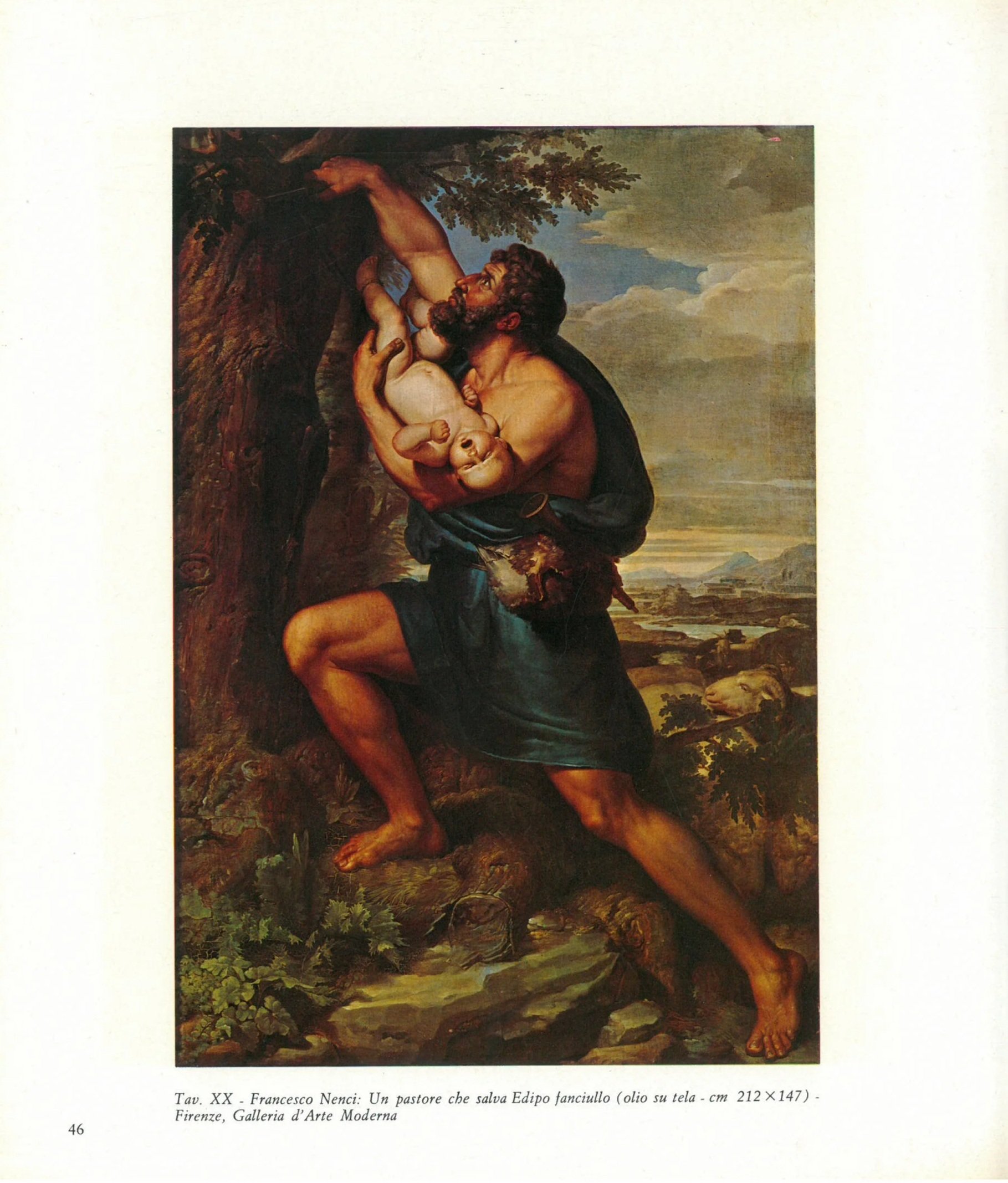
A Shepherd Saving the Infant Oedipus
Francesco Nenci · 1833
Oil on canvas
Florence, Italy - Galleria d’Arte Moderna
LDA · XXIII · MMXXV
Source
Book · La Pittura di Storia dell’Ottocento Italiano di Fortunato Bellonzi · Fratelli Fabbri Editori · 1967 · p. 46
The painting depicts the rescue of the newborn Oedipus, abandoned to die on the mountainside by order of King Laius. Nenci emphasises physical effort rather than dramatic spectacle, presenting the shepherd’s strained posture as the central narrative force. The composition reinforces moral contrast: the vulnerability of the infant against the muscular labour of the rescuer affirms the shepherd’s agency and compassion. The surrounding landscape operates not as theatrical scenery but as evidence of exposure and danger, situating the child’s survival against the environment intended to kill him. The work reflects 19th-century academic history painting’s interest in the decisive moral act rather than the myth’s later tragic developments.
Reposting welcome; please credit Libreria d’Arte - Studio Soli.
Detail
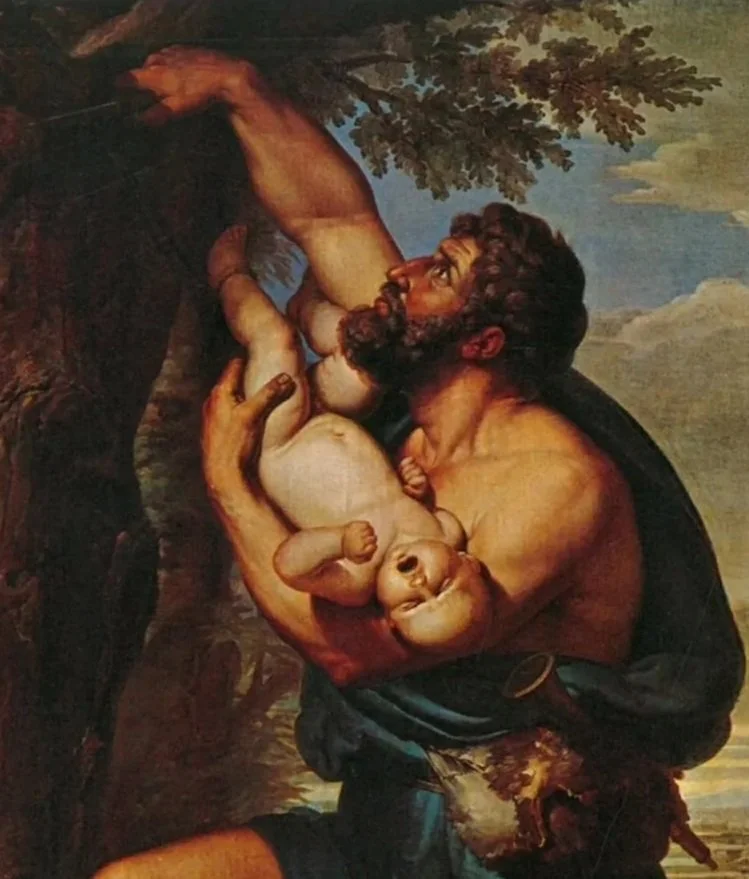
The shepherd’s upward grip - the arm stretched toward the tree root highlights physical exertion as the means of salvation, foregrounding human intervention rather than divine rescue in this earliest moment of the Oedipus narrative.
The exposed infant - the unclothed body and limp limbs underscore the child’s absolute vulnerability, marking the rescue as a response to abandonment rather than accident and identifying the shepherd as the first agent to counter the prophecy.
